Silicon Valley part II: India's tech boom
Seth Price | June 26, 2025What started as a mass migration of programming and technical support jobs from the U.S. to India in the early 2000s has taken on a life of its own. New tech ventures, design firms, and even large, U.S.-based companies have taken notice of the vast number of engineers and the competitive labor costs in India.
The New York Times recently highlighted the growing number of tech and engineering companies that have opened offices in India. Around 1800 foreign-based companies (most of which are based in the U.S.) have offices in India, representing about 1.9 million employees. According to Reuters, the Indian tech market is expected to break $300 billion by 2026.
Drive towards growth in India
The reason for the rapid expansion of tech companies in India is complex and consists of many economic and social factors. Two of the biggest contributors are the large talent pool and the fact that global markets have expanded into regions with competitive labor costs.
India's talent market
India’s large population and developing technological infrastructure is a major contributor to its growth in engineering fields. Associated with these advances is continued investment in educational institutions.
According to the Center for Security and Emerging Technologies (CSET), India is producing around 2.55 million graduates of STEM fields per year. This is second in the world, behind China, with 3.57 million, and three times as many as the U.S. (820,000). This data also shows that 30% of all undergraduate degrees in India are in STEM fields; the U.S. figure is around 20%.
 Young students calibrating a robot for a robotics competition. Source: Biswarup Ganguly/Wikipedia Commons
STEM fields are deeply valued in Indian society, though emphasis may vary based on educational policies and social expectations. Compounding this is the fact that India is a “young” country, with 35% of its population under the age of 35. With younger generations embracing technology at a higher rate than older generations, there are plenty of young, curious minds who want to design the next video game, smartphone or electronic device.
In India, traditional education also has a rigorous focus that favors STEM fields. Greater emphasis is placed on structure and academic rigor, particularly of standardized test scores, than sports, arts and creative expression. This leads to a solid foundation in math and science from an early age.
Many primary schools require students to learn English, breaking down the communication barriers between the U.S., Canada and many other countries. Interestingly, technological vocabulary is largely in English. Rather than developing a new word in their native language, they simply adopt the English version of the word.
Global markets
Perhaps one of the biggest drivers is the fact that labor- skilled or unskilled- is simply cheaper in India than it is in the U.S. As an example, in 2023, the minimum wage in India was $395 a month. A software engineer in India may make $45k a year, which is significantly higher than minimum wage, adding to the drive to work in a tech field. As a contrast, the same report showed the average salary of a U.S.-based software engineer was around $140k. The end result -- for the cost of one U.S.-based software engineer, the company can hire three India-based software engineers, and the Indian software engineers still enjoy a high standard of living.
Having a global market presence leads to other challenges, especially in the tech market sector. Industry never sleeps, and neither do tech products. In order to provide the best technical customer support, companies can either pay for round-the-clock coverage in the U.S. or pay to have support centers and sales centers across the globe. In the U.S., night shift work is notoriously hard to staff, and often requires a pay differential to entice employees to burn the midnight oil.
Also, the drive to decentralize businesses leads to growth in foreign labor markets. Decentralization makes companies less reliant on current and local political uncertainties. For soft products, such as software or designs, information is easily transferred between international offices, providing flexibility in business models.
Graduate student pipeline
One potential reason for growth of Indian engineers at U.S.-based institutions is the graduate student pipeline. The pipeline consists of a professor who recruits both undergraduate and graduate students from their home location, be it a specific university, town or country.
It should be noted that this pipeline is not exclusive to professors from India; who doesn’t have a slight bias towards their alma mater when hiring? Besides this, many U.S.-based universities form strategic partnerships with universities abroad to bring new ideas to both universities and ensure equal rigor in studies at both universities.
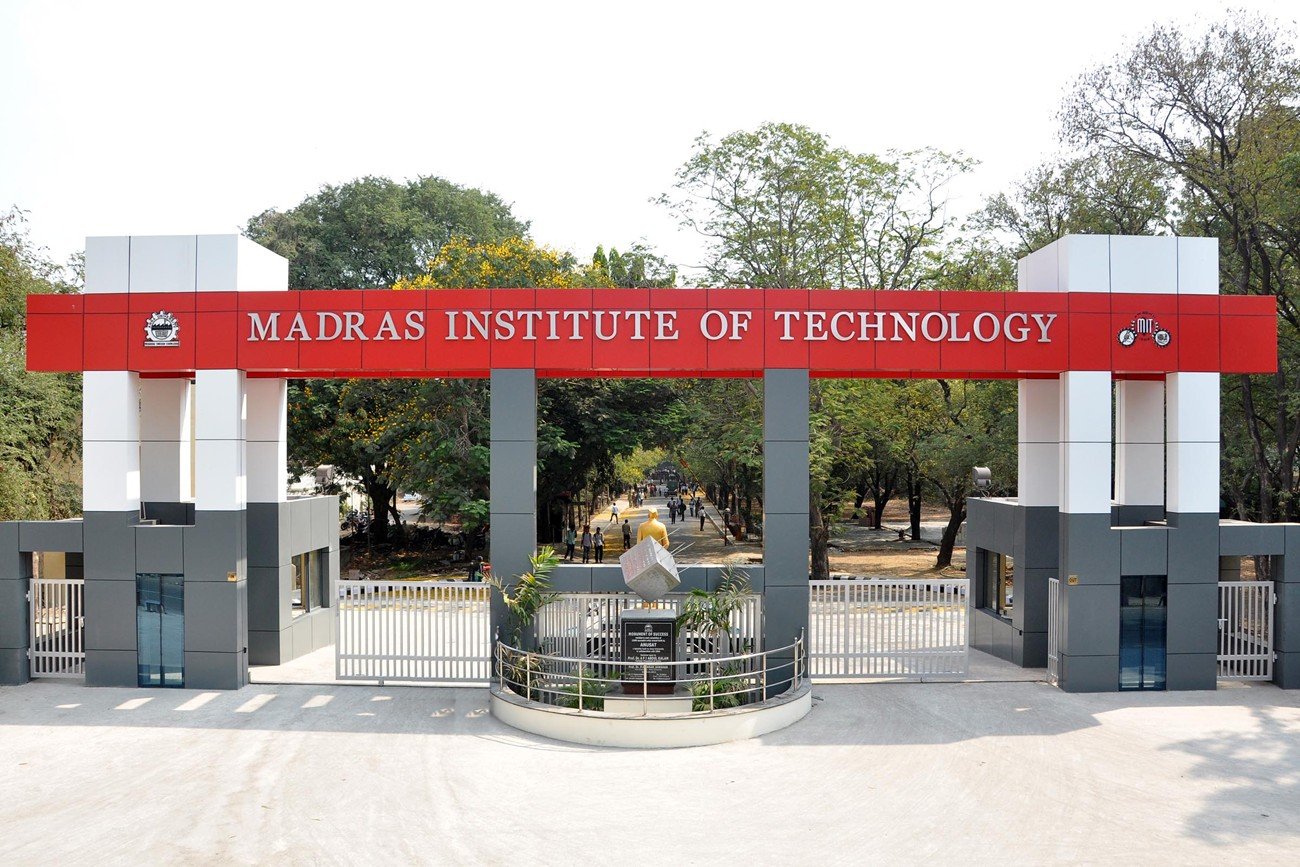 Madras Institute of Technology is a well respected tech school in Chennai, India. Source: Madras Institute of Technology
Consider a student who conducted all of their undergraduate research in a certain area. They advance in their career and start their own research as a professor in this same area. It makes sense to hire new graduate students from their alma mater, as their capabilities and background knowledge are largely understood.
As this pipeline continues, some graduating students will begin their professional lives in the U.S. Others will return to their home country, armed with new knowledge and ideas. This leads to new startup companies or significant contributions to existing tech companies in India and around the world.