Safety: Fire and explosion protection
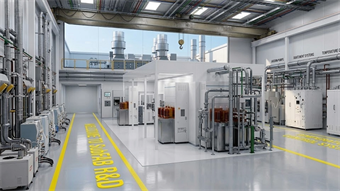
June 30, 2025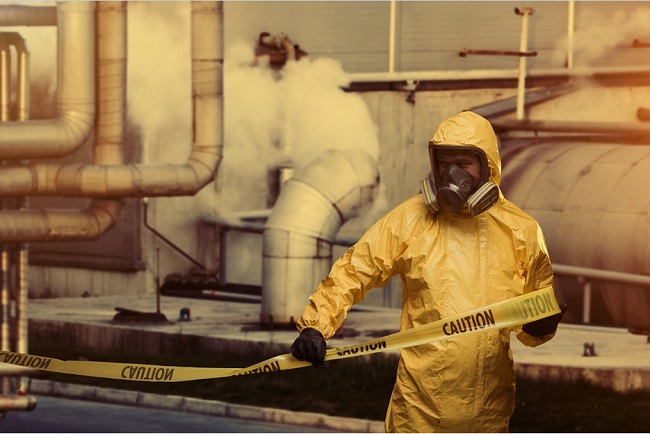 Figure 1: Control Instruments is an application specialist in industrial safety, process and environmental gas monitoring. Source: Control Instruments
Application specialists — Education is essential
Control Instruments positions itself as the application specialist in industrial safety, process and environmental gas monitoring.
Since 1969, they have been engineering and manufacturing solutions to both simple and complex gas monitoring problems. Control Instruments’ primary mission is to protect life and property from accidents caused by hazardous gases.
Studies have shown that practically all accidents can be traced back to human failures in three particular areas:
- Inadequate training
- Improper maintenance
- Improper application of equipment
Control Instrument’s goal is to first educate their customers in understanding gas hazards, then assisting them in selecting the appropriate equipment for each application.
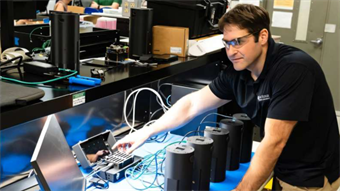
 Figure 2: Control Instrument’s goal is to first educate their customers in understanding gas hazards, then assisting them in selecting the appropriate equipment for each application. Source: Control Instruments
Basic principle of safety — Accident triangle
A basic principle of safety can be illustrated by the accident triangle. This principle states that for each accidental death that occurs, there are X instances of human injury, Y instances of property damage and Z instances of near misses (hazardous situation exists but accident doesn’t occur). The best way to avoid death, injury and property loss is to stay out of the near miss zone.
Staying out of the near miss zone requires analyzing hazards, creating guidelines for safe operation and then educating people about the areas by placing warnings and indicators whenever possible. Unless users follow safety guidelines to prevent and avoid accidents, a great deal more money and time is spent correcting them after they’ve occurred.
When combined with proper operator training, hazardous gas detection is a cost-effective way to manage risk and help ensure industrial safety.
 Figure 3: Three elements must be present for a flammable hazard to exist: fuel, oxygen and a source of ignition. Source: Control Instruments
Basic principle of safety — Human error
Hazard indicators can significantly reduce accidents, but some people disobey them, committing a human error in judgment. Their actions can result in death, injury and property damage.
Human error has been found to be a major factor in almost all industrial accidents. In some of these accidents, operators were not aware of the hazard, in others, they misunderstood the danger of operating in the near miss zone. Safety experts advise increasing education and training of personnel as the best way to avoid such accidents.
Some accidents are caused by human error of a more subtle nature than clear disregard of a rule. Such applications require continuous monitoring to provide the highest level of safety.
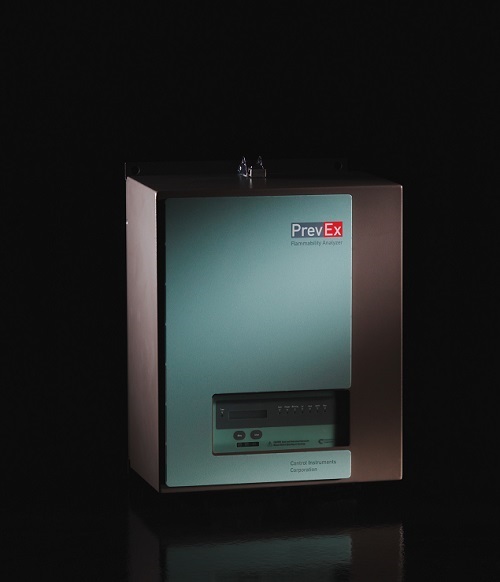 Figure 4: Choosing the right kind of instrument can be a detailed task, even when familiar with the process.
Flammable hazards — Eliminating hazards
Three elements must be present for a flammable hazard to exist: fuel, oxygen and a source of ignition. If any one of these elements is lacking, it is not possible to have a fire, which is why safety experts study ways to eliminate one of them.
The best way to control flammable gas or vapor hazards is to keep the level of fuel below the flammable level. Continuous monitoring of gas and vapor levels provides the early warning needed to correct dangerous situations.
This method works in the two basic types of applications: monitoring for leaks in areas where gases are not normally present; and monitoring for rising concentrations in processes where some flammable gas or vapor is always present.
Trying to remove oxygen sources (inerting) or attempting to eliminate all sources of ignition is not a safe or reliable way to reduce flammable hazards.
Gas vapor in air mixtures — LFL monitoring range
For each flammable substance there is a level of concentration in the air, usually expressed as a percent by volume, known as its lower flammable limit (LFL), or lower explosive limit (LEL).
Below the LFL, the mixture of fuel and air is too lean to support combustion. As the amount of fuel continues to increase, the mixture will eventually become too rich to burn — there will be too much fuel and not enough oxygen. This concentration is known as the upper flammable limit (UFL), or the upper explosive limit (UEL).
Between the LFL and the UFL lies the flammable range where, given a source of ignition, the mixture will readily ignite. While it may be theoretically possible to operate safely at concentrations up to 100% of the LFL, authorities world-wide have established safety regulations that require operation well below this point.
Sampling methods — Area monitoring
Indoor and outdoor gas hazards that exist in open areas are usually monitored using diffusion-type sensors.
This sensor type has no active sample-drawing system; it relies on the ambient air movement and pressure to deliver the sample to the sensing element. When being installed, the weight of the sample in relation to ambient air is important, and will determine sensor placement.
Diffusion sensors are a reliable and cost-effective way to monitor open area gas hazards.
Sampling methods — Process monitoring
Enclosed spaces require an active sample drawing system. Active sampling systems are superior to diffusion-sampling systems because they confirm that a sample is flowing across the sensing element, but since a sample is being transported, they are also more complicated.
Care should be taken to avoid condensation and keep sample lines short, to limit maintenance issues and response-time delays.
- Process monitoring: Drawn sampling
- Select a monitor to meet NFPA 86 requirements
- Flammability analyzers for process applications
- Flammability analyzers vs FID
- PrevEx flammability analyzers
Application concerns — Choosing the right analyzer
When looking for a gas monitoring system, users must address some key concerns:
- Proper selection of sensor technology accuracy of readings
- Speed of response
- Maintenance
Although several different types of sensors are employed as LFL monitors, each has an appropriate application to which it is best suited. Fires and explosions in equipment that was thought to be protected can occur without warning when a sensor is not capable of doing the job it’s been assigned. Choosing the right kind of instrument can be a detailed task, even when familiar with the process.
The instrument of choice may vary from one application to the next, but the correct one should perform accurately under the demands of the industrial environment, avoiding unnecessary downtime and frequent maintenance.