
Reducing fuel costs in process ovens and dryers
January 18, 2019Hot air ventilation
Many manufacturing processes use chemical solvents to produce products. As a result, hot air dryers are frequently used to evaporate those solvents.
Heating and moving large amounts of air can be extremely expensive. A common, first approach to cost control is reducing ventilation air to the minimum level that assures complete drying at the desired production speed. However, this could lead to fire or explosion due to a dangerous build-up of flammable vapors caused by insufficient ventilation.
Control of flammable vapors
To prevent such incidents, the National Fire Protection Association (NFPA) developed NFPA 86, the national standard for the safe operation of ovens and dryers.
Section 11.6.8.1 of the standard states, "The safety ventilation rate shall be designed, maintained and operated to prevent the vapor concentration in the oven exhaust from exceeding 25 percent of the LFL."
This standard provides a method for either estimating or calculating the minimum amount of ventilation air required. In most cases, the estimation method requires the use of 12,000 ft3 of air per gallon of solvent evaporated.
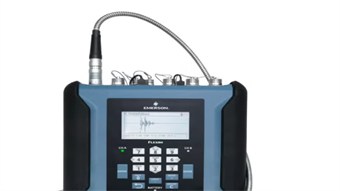
Using solvent vapor monitors
The cost of heating large volumes of ventilation air is high. However, NFPA 86 allows a substantial reduction in air ventilation in cases "where a continuous solvent vapor concentration indicator and controller is provided.”
When such instruments continuously sample the exhaust of an oven zone, the vapor concentration in that zone is allowed to rise as high as 50% LFL.
This allows the implementation of several money-saving steps.
· A reduction of ventilation air without affecting existing production rates or violating NFPA safety directives.
· An increase in production speed without increasing existing air or fuel costs.
· Compound savings by reusing, rather than expelling, some of a hot exhaust stream back into an oven zone.
· Reduction of oven exhaust rates to lower the demand on VOC destruction oxidizers.
Benefits can range from a simple reduction of heated ventilation air to a combination of both reduced heating and increased production. This can result in dramatic fuel savings.
Other advantages to adding analyzers are often overlooked, because they do not seem to be associated with the problem in another part of the plant. This would be the case when a thermal oxidizer has reached its maximum-rated airflow capacity, preventing the addition of new process lines without a sizeable investment. Instead of adding another oxidizer for the new equipment, an option would be to reduce the outflow from existing process lines by recirculating a portion of the exhaust air. The cost of the solvent vapor analyzers would be quickly recouped.


Many years ago, I designed and built a drying oven for curing a cellulose based lacquer. It was approx. 40' long x 8' wide & 12' high; it had two levels and about 12 runs of conveyor running the length (6 on bottom, 6 on top). It fed in at the top & out at the bottom, both through the same opening, which had a extract duct to stop any fumes escaping into the atmosphere. Internally it had two boxes the size of the internal dims, 6" deep (one at the top, one on the bottom), the top fed by a combustion chamber on top of the oven. This forced hot air down through the product and sucked into the bottom collector box; by way of a duct, it was sent back up to the combustion chamber to be heated up with the process starting again. The gas supply was controlled by a variable gas valve linked to thermostats around the drying chamber; we noticed that after the initial start up, when the oven was empty, the gas valve was at 100%. When the product entered and the fumes were being sucked into the fire box the valve shut down to as much as 50%, meaning we were burning fumes mixed with gas. It made the process extremely efficient by accident, but I said it was planned that way anyway. Big pat on the back, but no pay raise.
In reply to #1
I can see some of the efficiencies in a regen affect as well as possibly an oxider effect to your NCG’s?...