Innovative coating protects iron from rust with 99.6% effectiveness
Marie Donlon | June 20, 2025A new, dual-layer coating that offers 99.6% protection against iron corrosion has been developed by a team of researchers at the Hebrew University of Jerusalem.
To develop the coating, the team combined a thin molecular primer with a durable polymer layer, which created a strong, long-lasting barrier against rust. This new coating promises to significantly cut maintenance costs and extend the lifespan of iron-based materials that are used in construction, transportation and manufacturing.
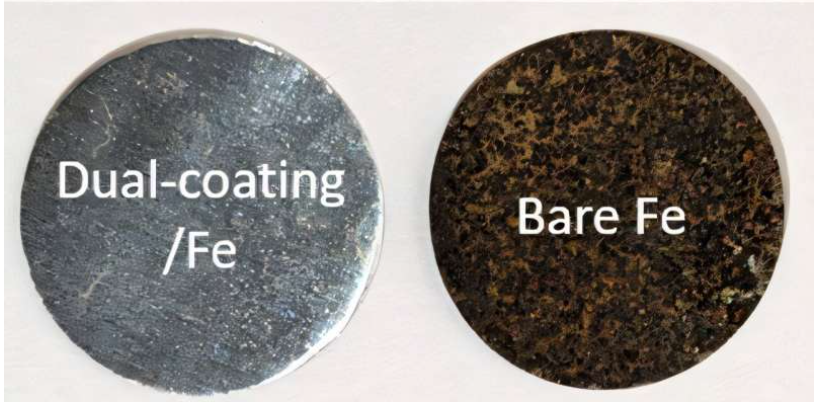 Right image: uncoated iron. Left image: coated iron. Both shown after exposure to rust-promoting conditions. Source: Linoy Amar
The team described that the first layer of the coating features an ultra-thin layer comprised of N-Heterocyclic Carbene (NHC) molecules, which create a tight bond with the iron surface.
Meanwhile, this first layer, the so-called primer layer, ensures that the second layer, which is a polymer-based coating, sticks firmly, and creates a protective shield that can withstand harsh conditions, like prolonged exposure to saltwater.
During trials of the coating using corrosive saltwater, the dual-layer system dramatically reduced the amount of iron corrosion. By forming a strong chemical connection between the iron and the protective layers, this method offers far greater durability than conventional coatings, which tend to wear down or peel over time, its developers concluded.
The researchers detailed the dual coating in the article, “Self‐Assembled Monolayer of N‐Heterocyclic Carbene as a Primer in a Dual‐Layer Coating for Corrosion Protection on Iron,” which appears in the journal Angewandte Chemie International Edition.