US energy infrastructure earns a failing grade
S. Himmelstein | April 28, 2025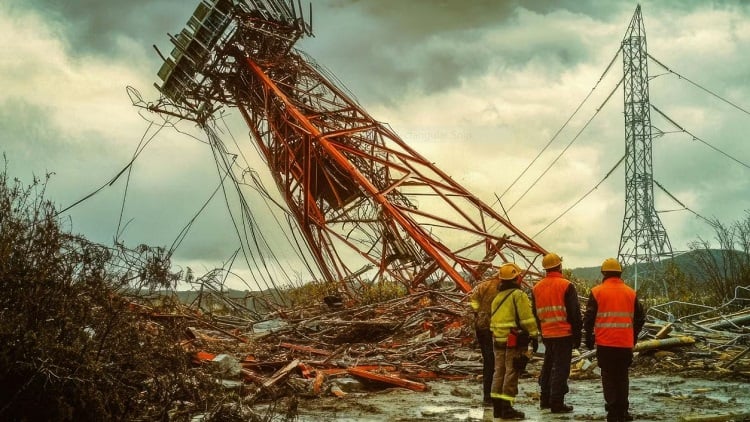 Source: Oleg Kryuchko/Dreamstime
The U.S. power sector has a lot of homework to do, according to the American Society of Civil Engineers (ASCE). The state of the national energy infrastructure has been downgraded in the ASCE 2025 Infrastructure Report Card to a D+ from the C- given in 2021.
A shortage of distribution transformers, increases in severe weather events and a lack of transmission capacity are cited as some of the challenges facing this sector. Energy generation and delivery will require at least $1.89 trillion of near-term future investment to reach a healthy state of repair and keep up with the onset of expanding electrification.
There are more than 60 million distribution transformers nationwide, which could triple by 2050 to account for rising demands. An ongoing shortage of distribution transformers is attributed to supply chain bottlenecks and a limited number of domestic manufacturers. Yet the capacity of these components will need to rise 160% to 250% by 2050 to meet anticipated needs.
ASCE recommends mitigating capacity shortfalls by accompanying major energy projects with sufficient storage infrastructure, and developing a robust national transformer inventory to ensure grid operators can replace transformers quickly and cost-effectively following disasters.
An increase in electric vehicles and expansion of data centers will require 35 GW of electricity by 2030 alone, up from 17 GW in 2022. Such accelerated demand, combined with federal and state net zero greenhouse gas emission goals, indicates that utilities will need to double existing transmission capacity to connect new renewable generation sources.
Other infrastructural sectors receiving D grades, which ASCE deems as poor and at risk, include aviation, dams, levees, roads, schools, transit, stormwater and wastewater sectors.