Using AI technology to combat honey fraud
Marie Donlon | May 11, 2025An artificial intelligence (AI)-powered technique for verifying the origin of honey, thereby ensuring the accuracy of its label, has been developed by researchers from McGill University.
"Honey is one of the most fraud-prone commodities in global trade. It often involves mislabeling where it was produced or the types of flowers that bees collected nectar from," the researchers explained.
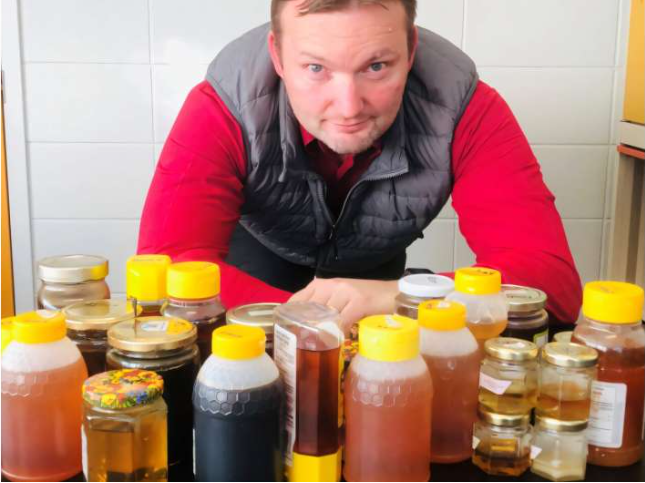 Source: McGill University
Specifically, honeys derived from a single flower tend to be more desirable and, subsequently, expensive due to their unique flavors and potential health benefits.
As such, some honey producers will intentionally mislabel their honey in a bid to charge more for the product, while other producers might do so unknowingly, due to the challenge of tracking precisely where bees collect nectar.
To remedy this, the team developed a new method capable of determining what type of flowers the bees visited to produce a specific honey.
To accomplish this, the new method relies on high-resolution mass spectrometry to scan honey at the molecular level to devise a unique chemical "fingerprint." Then, machine learning algorithms are employed to read the fingerprint and verify the honey's origin.
In the lab, the team checked the accuracy of the new method by testing it on an assortment of honey samples and compared those findings to honey derived from known botanical sources.
This process, unlike current methods that can take days, can be accomplished in minutes, the researchers concluded.
The researchers envision their new technique being adopted by food inspection agencies worldwide. They also expect to examine how it might be used on other food products prone to mislabeling.
The new technique is detailed in the article, “Rapid Convolutional Algorithm for the Discovery of Blueberry Honey Authenticity Markers via Nontargeted LC-MS Analysis,” which appears in the journal Analytical Chemistry.