I want candy
January 27, 2025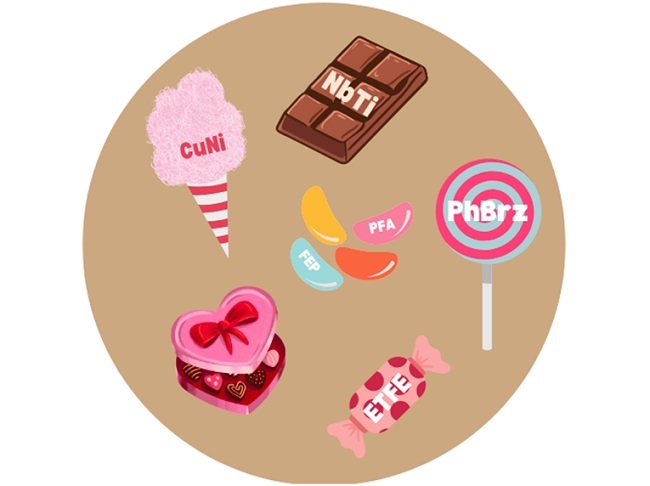 Figure 1: Assorted candies require assorted manufacturing needs. Source: Cooner Wire
Most people have a favorite type of candy that they prefer. Some will go the chocolate route with Hershey’s, Snickers or M&Ms. Others like Jolly Ranchers, caramels, lollipops or Gummy Bears. Everyone has different tastes. Marshawn Lynch's love of Skittles is well known, and Patrick Mahomes is a Starburst guy. Bill Nye the Science Guy ranks Life Savers high on his list. Eating the same food or candy repeatedly limits the palate, however. Even though a person’s first choice may be favored, they cannot just settle on one candy, can they? Well, maybe Marshawn Lynch can, but the rest of the world would rather sample a variety because they are all so good.
Confectionary manufacturers expand their variety to capture increased market share. The Hershey Company does not just make Kisses. They offer Twizzlers, Reese’s Peanut Butter Cups and Reese’s Pieces, Milk Duds and Good & Plenty, among other brands. Mars offers Snickers, Twix, Skittles, Starburst and more. Ferrara and Nabisco also produce candy favorites like Jelly Belly, Tootsie Rolls and Kit Kats.
Just like different candies satisfy different tastes, different manufacturing capabilities satisfy different device application requirements. Unique electrical environment applications require unique ingredients in the make-up of their cables. Candy is a confection that features sugar as a principal ingredient. The additional ingredients are added to satisfy the specific candy’s ingredients. The manufacturing capabilities required for Hershey Kisses are not the same for manufacturing Twizzlers. The overwhelming majority of Halloween mixed candy bag cables are made with bare copper or tinned copper for their desired electrical conductivity and affordability. Some cables with higher temperature or corrosion resistance requirements are made with silver plated copper or nickel-plated copper, but what happens when the temperature drops?
Device manufacturers with cryogenic applications require special conductor materials that will meet the challenges of extreme cold. Cooner Wire offers a wide range of conductors that are up for the challenge. They have made cryogenic cables with copper nickel (CuNi 70/30) and niobium titanium (NbTi) as conductors. The CuNi is desirable because it retains its ductility at low temperatures and exhibits good thermal conductivity, which is advantageous for heat exchangers. Other common conductor materials get fragile and break at cold temps. The NbTi has zero resistance at 4° K and below.
The superconducting niobium-titanium (NbTi) is famously used in the Large Hadron Collider (LHC) magnets. The LHC is a ring of superconducting magnets that is the most powerful particle accelerator in the world. It generates a strong magnetic field that accelerates and collides particles at very high speeds to study the fundamental particles and forces of nature. These particles are accelerated to a speed close to the speed of light. The accelerator sits in a tunnel 100 meters underground at CERN, the European Organization for Nuclear Research, on the Franco-Swiss border near Geneva, Switzerland. This is the same niobium-titanium superconducting material used in some of Cooner Wire cryostat cables on a much smaller level.
The insulation of choice for cryogenic applications is ethylene tetrafluoroethylene (ETFE) — DuPont Tefzel. ETFE has proven to be the best performer in these cables. Other fluoropolymers like Teflon, Tetrafluoroethylene (TFE), Perfluoroalkoxy (PFA) and fluorinated ethylene propylene (FEP) tend to get brittle at cryogenic temperatures. ETFE has held-up well in these cold environments.
The shielding material chosen by cryogenic device manufacturers in cold environments is either stainless steel or phosphor bronze. stainless steel is chosen because it retains its engineering properties, which allows them to maintain their ductility and impact toughness. As the temperature drops, stainless steel’s tensile and yield strength will actually increase. Phosphor bronze is sometimes chosen because of its combination of low thermal conductivity and fair electrical conductivity. This allows for electrical connections to devices at very low temperatures without adding too much heat. Phosphor bronze wires are also suitable for almost all cryogenic applications because of their low magnetoresistance, which makes them ideal for use in magnetic fields.
Another example of needing a different conductor ingredient arose when a device manufacturer was having arcing issues with a grounding application for a highly sensitive environment. The company was able to source a pure silver raw material wire supplier and ultimately offered a ground strap made with pure silver. Silver will oxidize, but its oxide is conductive. It is expensive, but it works.
Most customers come to Cooner Wire for flexible cables. There is a difference between flexibility and flex life. They achieve the flexibility in their cables by using finely stranded wire (high strand counts) and soft silicone rubber or PVC insulating compounds. Many of these flexible cables are made with tinned copper conductors, which have a tensile strength of 35K psi. Customers in the robotics industry who are looking for increased flex life (high cycle counts) require high strength copper alloy conductors with a 90K psi tensile strength. A conductor with a higher tensile strength will yield a higher flex life and break strength. Cooner Wire stocks many different flexible multi-conductor cables in different AWG sizes that can be purchased in prototype lengths for ambitious R&D engineers that do not want to wait. Samples are available for flexibility evaluation by request. These are just some of the considerations that Cooner Wire takes into account when designing cables in partnership with their customers.
Being able to offer all of these diverse conductor materials and insulations sets Cooner Wire apart from other custom cable manufacturers. Settle for rigid tinned copper conductors in the past, and feel a different conductor material will yield better performance? A Cooner Wire cable design expert can help. Visit the Cooner Wire website for more information.