Stemming brain bleeds with nanorobots
Marie Donlon | September 22, 2024Nanoscale robots designed to stem brain bleeds caused by aneurysms — blood-filled bulges on a brain artery that can rupture and cause fatal bleeds — have been developed by a team of researchers from Edinburgh University.
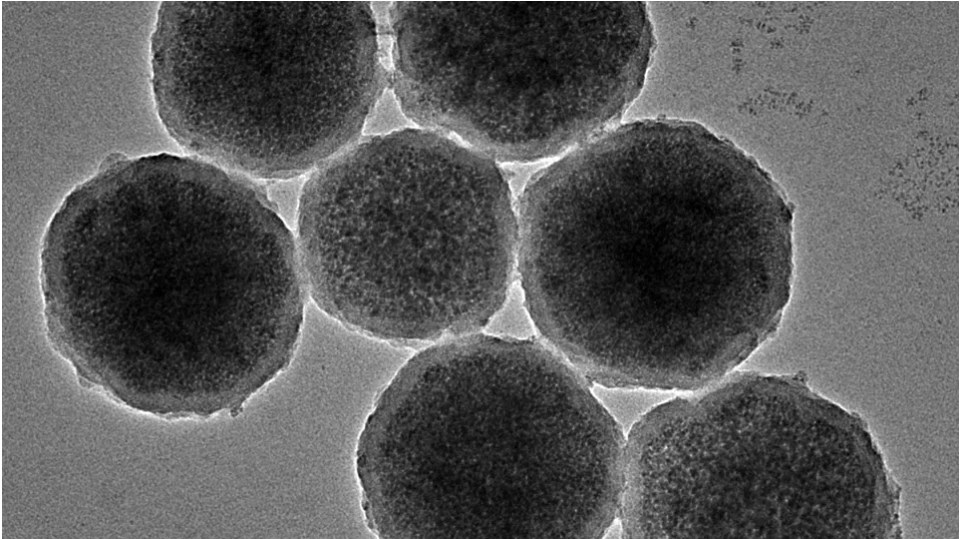 Source: Jian Wu
In the case of aneurysms, the researchers have specifically engineered magnetic nanorobots containing blood-clotting drugs enveloped in a protective coating designed to melt at exact temperatures.
During trials of the nanorobots, the researchers injected several hundred billion of these nanobots into an artery and remotely guided them with magnets and medical imaging to the location of an aneurysm.
The team explained that the magnetic sources outside the body encouraged the robots to cluster together inside the aneurysm and they were subsequently heated to their melting point, thus releasing the blood-clotting protein, which blocked the aneurysm and stemmed the bleeding into the brain.
In addition to stopping brain bleeds, the nanorobots could potentially be used to transport and release drug molecules to precise locations in the body without the risk of leaking into the bloodstream.
An article detailing the nanorobots, “Nanoarchitectonic Engineering of Thermal-Responsive Magnetic Nanorobot Collectives for Intracranial Aneurysm Therapy,” appears in the journal Small.