Using facial temperature-based AI in early disease diagnosis
Marie Donlon | July 20, 2024The researchers suggest that their new method might lead to early detection and diagnosis of assorted diseases and medical issues, thereby expediting the time it takes individuals to seek out and receive treatment for such issues.
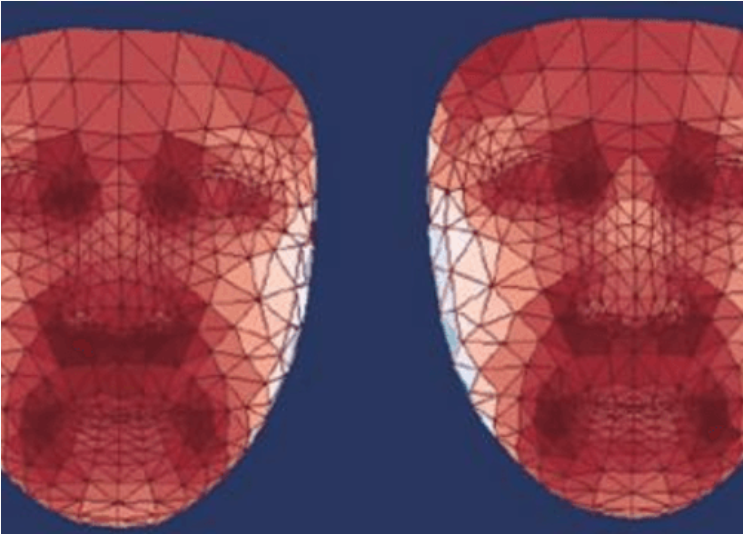 Average facial temperatures of two aging-status groups among women 50 to 60 years old. Source: Zhengqing Yu and Jing-Dong J Han/NNSFC
Initially, the team used AI to determine the relationship between facial temperature patterns and chronic illnesses — like diabetes and high blood pressure — to identify specific temperature changes in different regions of the face.
The researchers explained that AI-derived spatial temperature patterns involve using AI to analyze temperature variations across different parts of the face, which required the use of a thermal camera to capture the temperature data and a model trained with data to accurately interpret those patterns.
The researchers also sought to use the technology to determine aging rate, which is often an indicator of a person’s health status according to their biological age, which is associated with certain health risks.
To develop the device, the facial temperatures of over 2,800 participants between the ages of 21 and 88 were captured and that data was used to train the AI model so that it could be used to predict a person’s thermal age. Many key facial regions were identified — including the nose, eyes and cheeks — where the temperatures captured were associated with age and health.
For instance, the researchers suggested that people with higher blood pressure tend to have warmer cheeks, while those with warmer noses reportedly have a younger thermal age. Meanwhile, those with metabolic disorders exhibited faster thermal aging with higher eye area temperatures.
Following an analysis of the participants’ blood samples, the researchers found that elevated temperatures around the eyes and cheeks was mostly due to an increase in cellular activities associated with inflammation. This reportedly includes repairing damaged DNAs and fighting infections.
An article detailing the findings, “Thermal facial image analyses reveal quantitative hallmarks of aging and metabolic diseases,” appears in the journal Cell Metabolism.