New method detects covert subsurface nuclear tests with 99% accuracy
Marie Donlon | February 29, 2024Amid escalating nuclear tensions around the world, researchers at Australian National University (ANU) have developed a new approach for accurately spotting underground nuclear tests.
With measures like the Partial Test Ban Treaty resulting in the testing of nuclear weapons being done secretly as well as underground where the risk of radioactive fallout is reduced, it has become more challenging to detect such testing. Because irresponsible use of nuclear-capable weapons can potentially result in disastrous consequences, researchers are attempting to develop approaches for detecting such activity as early as possible.
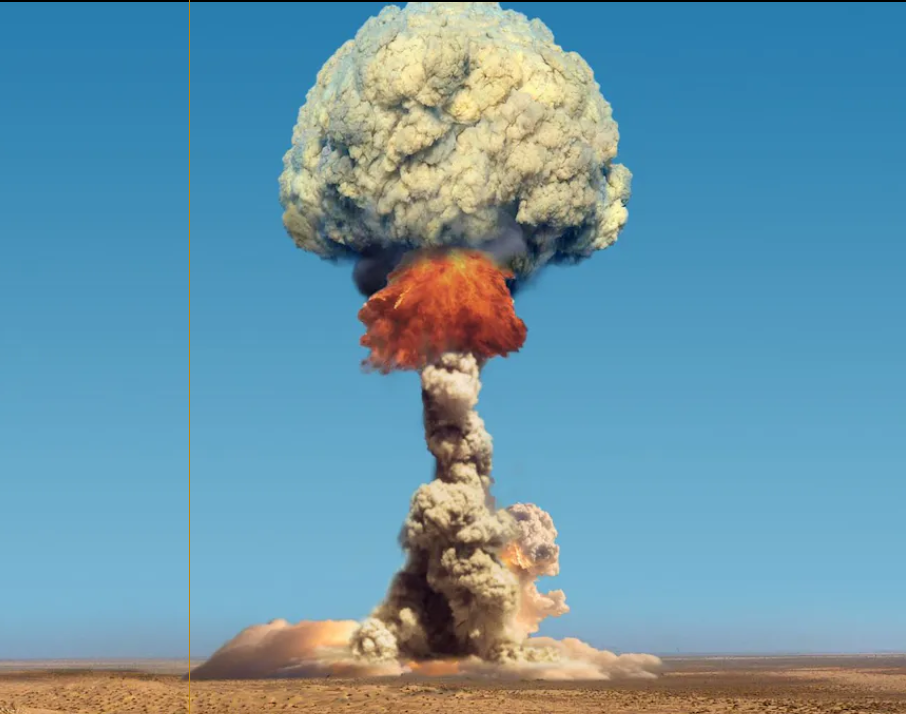 Source: ANU
While testing can unleash significant amounts of energy that cause seismic movements, the researchers suggest that seismometers — which measure movements of the tectonic plates and the intensity of earthquakes — might be used to detect this activity.
Although seismometers have been used to detect explosions and nuclear tests in the past, the ANU scientists have fine-tuned these measuring tools so that they can distinguish between a naturally occurring earthquake and a nuclear test.
To improve the statistical outcomes of these tests, the team examined seismic data from nuclear testing that has previously been carried out in Nevada. The researchers reportedly used data from roughly 140 of those explosions to serve as a dataset and thus to increase the classification success rate of their seismometers from 82% to 99%.
An article detailing the technology, “Seismic moment tensor classification using elliptical distribution functions on the hypersphere” appears in the Geophysical Journal International.