Drive-System Technology for Energy Savings
Engineering360 News Desk | February 22, 2016An engineer at Siemens has written a white paper recommending ways in which converting machinery can be optimized to reduce energy consumption.
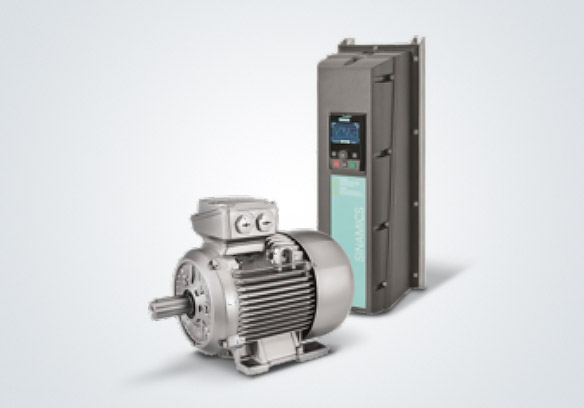 The Siemens white paper recommends ways in which converting machinery can be optimized to reduce energy consumption. Source: Siemens. William Gilbert, industry manager, Converting Solutions, at Siemens Industry, Motion Control Business, says that although a common DC bus system will consume less amperage than an AC/AC drive system, active front-end (AFE) infeed technology “takes the DC common bus system to a level of additional energy savings.”
He cites as one example a drive system for a converting line with an unwind, pull roll master section, coater, laminator and rewind. Each drive section must deal with its regenerative power individually, and the unwind and laminator machine sections that add tension to the web must return their power to the drive. As a result, this energy is dissipated by the regen resistors and 75 A of current is wasted as heat.
“In addition to line regen capability, this functionality also allows the input voltage and current waveforms to the drive to be sinusoidal, prevents harmonics from being generated back to the line, and offers near unity power factor… the main energy savings from the AFE comes from the improvement in power factor,” Gilbert says. AFE-controlled drives can have a .99+ power factor.”
Gilbert then turns to power factor (PF), explaining how to determine PF and how utility companies deal with industrial plants that have poor power factor. It then focuses on the “two major areas in converting machinery where significant energy is lost through friction and mechanical inefficiency…mechanical drive systems or gearboxes with high ratios; and unwinds with mechanical tension control brakes.”
In the case of high-ratio gearboxes, direct-driven sections with torque motors or even conventional motors will minimize or eliminate energy losses. And with unwinds and mechanical brakes, today’s AC drive systems can regenerate the energy back to the AC line just as the once-common DC drives did. However, AC drive systems also provide several added benefits.
“Sending the tension energy back to the line means power that once was wasted can now be retained,” Gilbert says, “instead of the system producing heat and worn parts.” Additionally, if the drive is equipped with AFE technology, it will return the energy with “near unity power factor--not possible for any DC drive system.”
Gilbert also discusses the importance of proper tuning of coordinated drives to reap energy savings, and where variable-speed drives fit into the equation, in particular when looking to minimize pump and fan losses.