Antireflective coatings enhance solar cell performance
S. Himmelstein | February 15, 2024The use of silicon dioxide (SiO2) and zirconium dioxide (ZrO2) as an anti-reflection coating for polycrystalline silicon solar cells was tested by an international group of scientists.
Solar cells 5.0 cm × 4.0 cm and with an efficiency of 14.4% were coated with either SiO2, ZrO2 or a SiO2-ZrO2 layer with a ratio of 1:1 using the radio frequency sputter coating technique at room temperature. Light absorption and transmittance for these samples were determined and compared with that of uncoated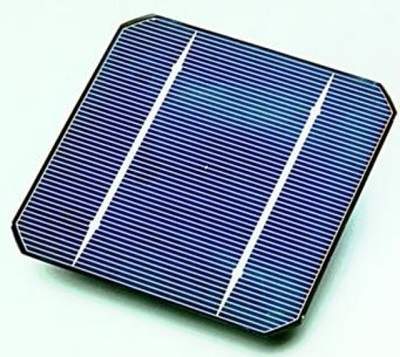 Source: Wikimedia Commons reference cells.
Current-voltage measurements reported in the Journal of Materials Research and Technology document a power conversion efficiency of 14.4 for the uncoated cell while that of the SiO2-ZrO2 sample was 17.6%. The SiO2-only device had an efficiency of 15.6%, and the ZrO2-only cell had an efficiency of 16.7%. The superior performance of the blended coating was also indicated by higher hall mobility and carrier concentration.
Researchers from Princess Nourah Bint Abdulrahman University (Saudi Arabia), Kongu Engineering College (India), Velalar College of Engineering and Technology (India), King Mongkut's University of Technology North Bangkok (Thailand), Prince Sattam Bin Abdulaziz University (Saudi Arabia), Qassim University (Saudi Arabia) and National Research Centre (Egypt) contributed to this project.