Cambridge hologram HUD has drivers seeing through hazards
Marie Donlon | January 30, 2024A team of researchers from the University of Cambridge in the U.K. are working to create a heads-up display (HUD) for drivers that employs 3D holograms to represent hazards and road signs that are obstructed from view.
According to the researchers, the system collects data using light detection and ranging (lidar) and then an augmented reality (AR) holographic point cloud video projection system displays images, which represent real-life objects in both size and distance. Such holographic projections reportedly enable drivers to focus their attention on the road rather than the windshield.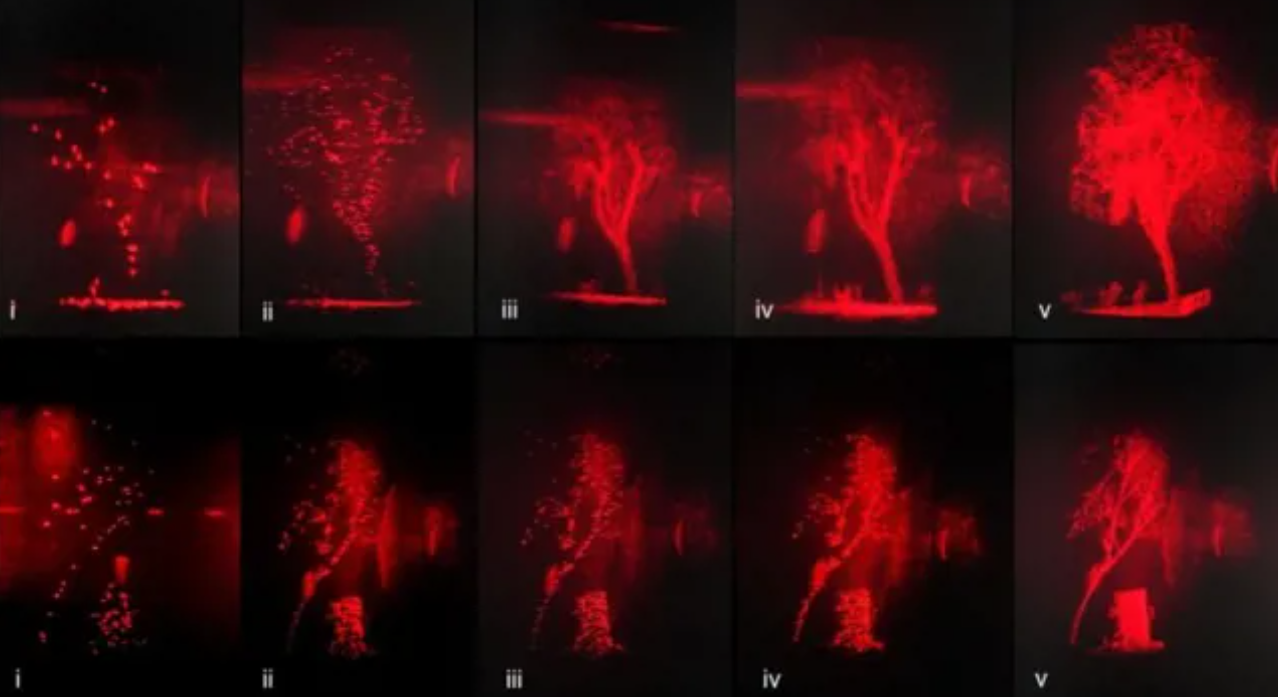 Source: University of Cambridge
“The data we collected can be shared and stored in the cloud, so that any drivers passing by would have access to it — it’s like a more sophisticated version of the navigation apps we use every day to provide real-time traffic information,” the researchers added. “This way, the system is dynamic and can adapt to changing conditions, as hazards or obstacles move on or off the street.”
An article detailing the HUD system, "Accelerated Augmented Reality Holographic 4k Video Projections Based on Lidar Point Clouds for Automotive Head-Up Displays,” appears in the journal Advanced Optical Materials.