A look at long-term failure modes in metals
Seth Price | October 12, 2023The most obvious causes of failure involve overloading a material past its yield stress, such as placing too heavy of a load on a beam. Other common failure modes involve hitting a material too quickly, generating a high strain rate, thus causing the material to break. In both of these cases, the yield stress is exceeded.
However, there are other failure modes that do not involve exceeding the yield stress of the material, or rather, it would seem that the applied stress is below the textbook value of the yield stress. In reality, the yield stress for the material, given the circumstances, has been exceeded, but why is this value so much lower than the textbook value? This brings up the discussion of long-term failure modes.
Fatigue
Fatigue failure is when a material has been stressed repeatedly and fails well below the yield stress. Often, when some part “wears out,” it can be attributed to fatigue failure, as the part is stressed repeatedly to some value below the yield stress, but it eventually fails anyhow.
One method of determining how long a material will last under repeated loading is to perform a fatigue test, where a material is rotated at high speed and under different loading conditions until it fails. These tests are plotted on a “Stress/Number of Cycles” or “S-n curve,” where, as expected, higher stresses cause parts to fail with fewer numbers of cycles.
 S-n curve for determining fatigue strength. Source: AndrewDressel/CC BY-SA 3.0
What may not be expected is the concept of an “endurance limit” or “fatigue limit.” Certain materials will not fail under repeated loadings unless the stress is above the endurance limit. In the graph above, notice that as long as the stress is kept below 30 ksi, the steel sample will not fail due to fatigue failure, no matter how many cycles it experiences. The aluminum sample will eventually fail, regardless of the stress; theoretically if someone tapped it gently with their finger enough times (more than 10^9 times) it would fail.
The endurance limit becomes a great way to design for fatigue resistance, but it cannot be the only criteria. Steel alloys do better, in general, than aluminum alloys for fatigue, but they may not perform as well in certain environments, such as environments corrosive to steel, but not as corrosive to aluminum, such as exposure to atmospheric or freshwater conditions.
At first glance, a fatigue life of 10,000,000 cycles seems like a lot. It seems like this would not be a concern for most applications, and for some applications, it isn’t a concern. However, consider a crankshaft in an automobile engine. If this engine idles at 1,000 RPM, then the crankshaft could be expected to fail in 10,000 minutes, or less than 167 hours. Given that many Americans spend around an hour a day commuting to and from work, this would mean that a brand-new car, running just at the idle speed, would only last 167 work days.
Creep
Creep is specifically a high-temperature failure mode. It is important to understand that creep does not occur because the material has melted, but rather that the material deforms under load over time. Steam transport pipes often experience creep failure, as they are placed under load and high temperatures for extended periods of time. Once they creep a little, they stop sealing, causing steam leaks and require replacement.
In general, creep becomes an issue once the temperature of the metal exceeds approximately one third of its melting temperature. From there, the higher the temperature, the more quickly creep failure will occur. While creep can happen below this temperature, it is typically not the driving force of failure, only a contributing factor.
Mechanically, the loading “influences” the direction of the generally random motion of the atoms in the metal. Instead of totally random motion, the atoms tend to prefer a particular direction to relieve the stress slightly. Over time, enough atoms perform this motion so that the metal begins to deform in this direction. Steam pipes, for example, tend to stretch downward, under both the loading of the steam pressure as well as gravitational forces pulling on them.
Preventing creep means either lowering the load or the operating temperature. Certain additives, such as chromium, cobalt, nickel, molybdenum and a few others can help improve creep strength. Also, certain heat treatments can improve creep strength as well.
Corrosion
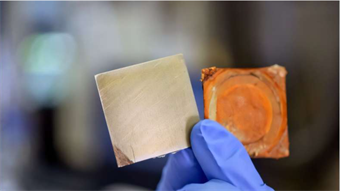
When most people think of corrosion, they think of rusty cars. However, there are many types of corrosion, and corrosion affects more than just steel. Loosely defined, corrosion encompasses any damage that occurs due to environmental conditions, including exposure to moisture, common chemicals, light, and so on.
Because there are many forms of corrosion, it is difficult to talk about them all in general terms. However, corrosion can be thought of as a stress multiplier, making components weaker than they otherwise would be, due to the environmental conditions. Mitigation techniques also depend on the specific type of corrosion encountered. A container ship immersed in salt water, for example, will likely have sacrificial anodes that are selectively attacked over the hull of the ship. Coatings can help keep the town’s water tower from rusting away, and so on.
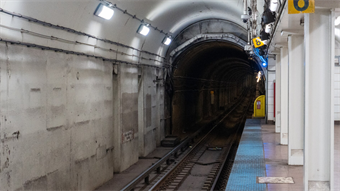
 Corrosion tends to attack components that are already under stress. Source: Public domain
Final thoughts
While each of these topics has been discussed individually, the reality is that failure of a component is attributed to a combination of causes. Even seemingly simple failures may have multiple sources of stresses that shorten a component’s life. A motor shaft that fails may be attributed to fatigue, but was also experiencing stress corrosion cracking due to the humid air in one manufacturing plant versus another. By examining each of the failure modes, engineers can become more aware of what types of environments shorten a component’s lifetime and can plan accordingly.