Plant-based solution for preventing freezer burn
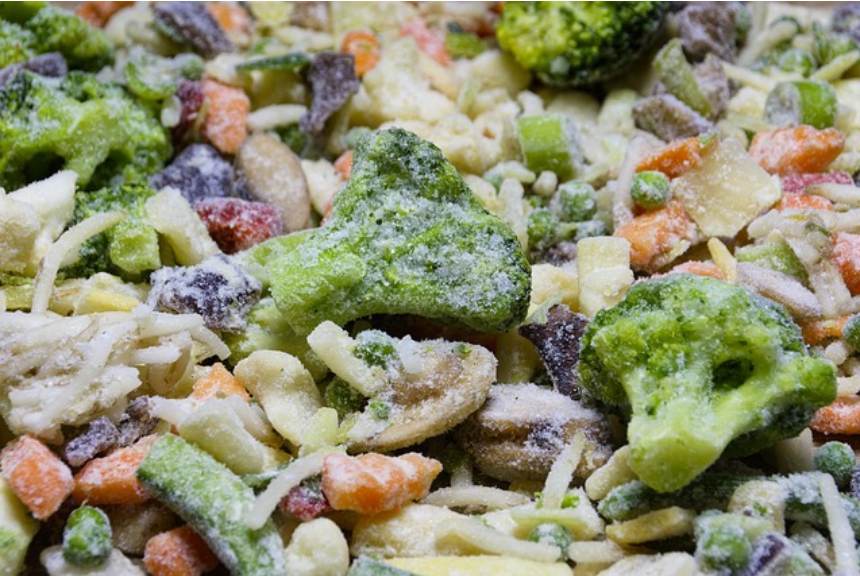
Marie Donlon | July 21, 2023A team of researchers from the University of Tennessee, Knoxville, and the Oak Ridge National Laboratory has developed a method for preventing the formation of ice and freezer burn on packaged frozen foods like vegetables.
Taking inspiration from fish located in deep polar waters that produce antifreeze proteins to prevent the liquid in their bodies from freezing, the team developed plant-based edible peptides with similar ice-crystal-inhibiting properties.
Using a commercially available soy protein isolate powder, which was exposed to three different hydrolyzing enzymes — alcalase, pancreatin and trypsin — the team developed the ice-inhibiting peptides.
According to the researchers, each mixture of peptides was also separated according to size into multiple fractions.
While all of the mixtures reportedly slowed ice growth in tests, the researchers explained, the mixtures specifically derived from alcalase and trypsin proved to be better inhibitors than those derived from pancreatin. For all three enzymes, the majority of activity came from the fraction featuring the largest peptides. Additionally, the larger fractions also included smaller peptides, which alone could not halt the growth of ice crystals but did reportedly boost activity.
The researchers suggest that these findings could eventually lead to the use of soy-derived peptides as a natural approach to preventing ice growth and freezer burn, and subsequently increase the shelf life of frozen foods.
An article detailing the process, "Ice Recrystallization Inhibition Activity of Soy Protein Hydrolysates," appears in the Journal of Agricultural and Food Chemistry.