Scientists create edible, transparent and biodegradable food packaging
Marie Donlon | July 31, 2023Scientists at the Chinese University of Hong Kong (CUHK) have created an edible, transparent and biodegradable material that shows promise as an alternative to the plastic used in food packaging.
To potentially alleviate the environmental impact of plastic food packaging, the team of CUHK scientists is exploring the use of bacterial cellulose (BC) — an organic compound derived from bacteria — in the manufacture of food packaging.
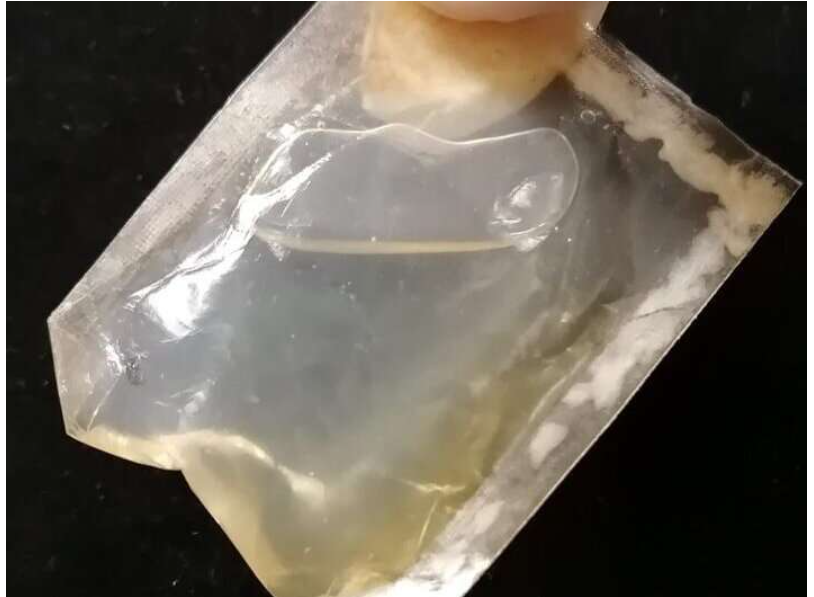 Source: CUHK
According to its developers, BC can be manufactured via microbial fermentation, which is a more sustainable and environmentally friendly alternative to producing commonly used plant-derived cellulose that requires the harvesting of trees or crops.
To remedy BC’s sensitivity to moisture in the air (hygroscopicity) — which negatively impacts BC’s physical properties and thus its use in packaging — the CUHK team added soy proteins to the structure of BC and coated it with an oil-resistant composite. The scientists explained that this led to the development of edible and transparent BC-based composite packaging.
"It does not require specific reaction conditions like chemical reactions, but rather a simple and practical method with mixing and coating. This approach offers a promising solution to the challenge of developing sustainable and environmentally friendly packaging materials that can replace single-use plastics on a large scale," the CUHK team explained.
In addition to degrading within one to two months’ time, the BC-derived material is also reportedly safe for turtles and other sea animals to consume.
The BC-based packaging is detailed in the article, Edible, strong, and low‐hygroscopic bacterial cellulose derived from biosynthesis and physical modification for food packaging, which appears in the Journal of the Science of Food and Agriculture.