Coated, reusable sponge gets the lead out
S. Himmelstein | June 09, 2023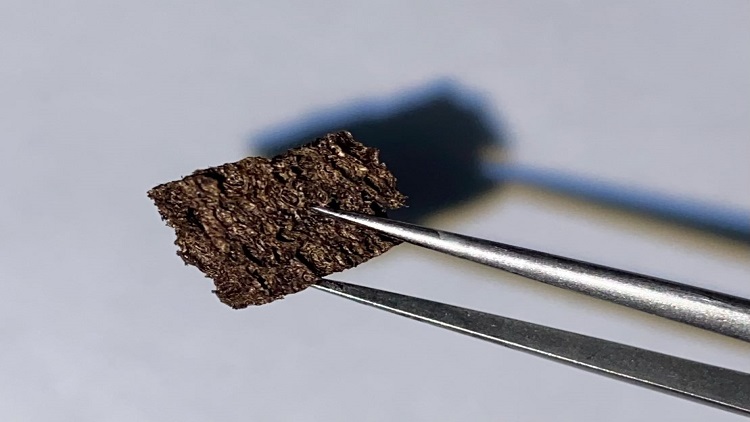 Heavy metals are recovered from water with a nanoparticle-coated sponge. Source: Northwestern University
A nanoparticle-coated sponge material developed at Northwestern University effectively removes heavy metals from contaminated water. The captured metals can be recovered and recycled for use in battery manufacture and other applications, enabling reuse of the sponge platform to produce potable drinking water.
After immersion in a slurry of manganese-doped goethite nanoparticles, a commercially available cellulose sponge was dried and rinsed with water to flush out loose particles, forming a high-surface-area nanoparticle coating just tens of nanometers thick. The sponges were then tested for treatment of lead-laden water, successfully bringing the metal levels to 2 ppb — well within the U.S. Food and Drug administration drinking water standard for lead of 5 ppb.
Subsequent treatment with mildly acidified water released the lead ions, rendering the sponge ready for another use. Although the sponge’s performance declined after the first use, it still recovered more than 90% of the ions during additional use cycles. The researchers also established design rules to guide the selection of other low-cost and nontoxic nanoparticles with affinities for trapping different metal ions.
The coated sponge system described in ACS ES&T Water is envisioned for use in commercial water filters, environmental clean-up, and water reclamation and treatment facilities.