AI system lets robots perform 10,000 scientific experiments a day
Marie Donlon | May 16, 2023A new artificial intelligence (AI) system that lets robots perform 10,000 scientific experiments a day has been developed by researchers from the University of Michigan.
The BacterAI system promises to expedite the time frame for discovery in fields like medicine, agriculture and environmental science, for instance.
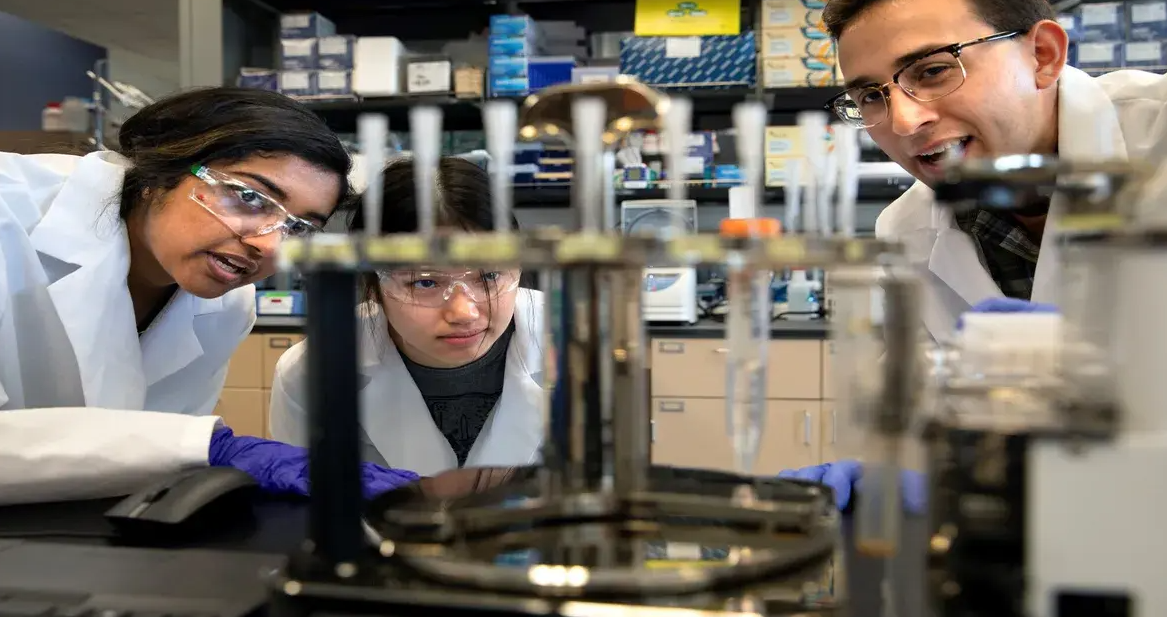 Source: Marcin Szczepanski/Lead Multimedia Storyteller, Michigan Engineering
To demonstrate the technology, researchers used BacterAI to determine the amino acid demands for growing beneficial mouth microbes.
Currently, manually determining the right combination of amino acids for each bacterial species is challenging thanks to the number of potential combinations that could result from the 20 available amino acids.
The researchers used BacterAI to test hundreds of combinations of amino acids each day and modified the combinations according to the previous day's results. Eventually, BacterAI accurately predicted the amino acid combinations for growth 90% of the time, according to the team.
This approach, wherein BacterAI is used to create its data set through a series of experiments, is considered far more efficient than the conventional method of feeding labeled data sets into a machine-learning model, the researchers suggest.
The article detailing BacterAI, BacterAI maps microbial metabolism without prior knowledge, appears in the journal Nature Microbiology.