New system promises to keep construction workers safe
Marie Donlon | May 15, 2023Computer scientists from the University of Houston have created a new system for keeping construction workers safe while on construction sites.
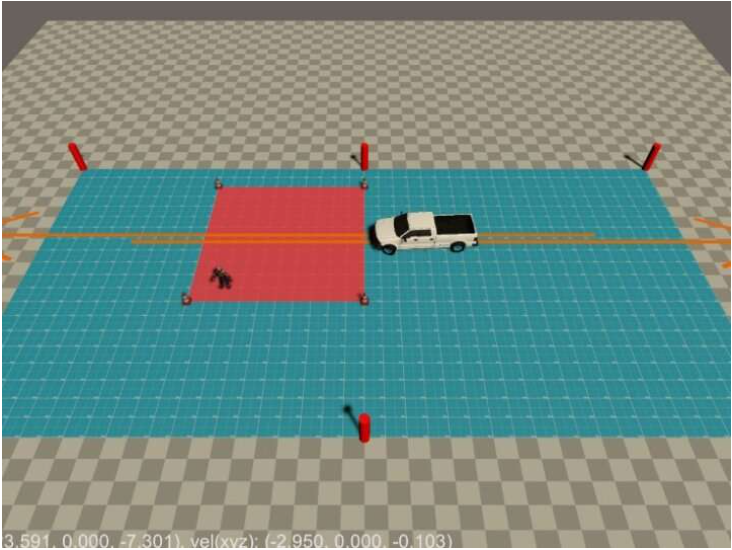
To accomplish this, the computer scientists have developed a system dubbed VIPER+ for tracking both workers and equipment on construction sites based on safety policies established at the beginning of projects when internal traffic control plans are made.
 Source: University of Houston
Such policies, according to the University of Houston team, define safe areas for workers and equipment as well as safe distances between workers and equipment amid equipment operation on the construction site. ViPER+ reportedly automates the monitoring of these policies while detecting violations as workers are working and equipment is operational.
To track the location of equipment and construction workers, ViPER+ employed ultra-wideband technology. "These radios use large bandwidths to communicate, which enables them to perform location tracking more accurately compared to other wireless radios," the team explained. "This was the technology we used to track the locations of workers and equipment."
Following a series of tests using a system of tags, which are small ultra-wideband radio transmitters affixed to workers and vehicles to monitor their locations, and anchors, which are ultra-wideband receivers that receive signals from tags, the team reviewed the data collected from the anchors and determined that VIPER+ overcomes non-line of sight scenarios wherein trucks and other construction equipment block the signal between the transmitter and receiver in ultra-wideband radio transmissions.
The VIPER+ system is detailed in the article, ”ViPER+: Vehicle Pose Estimation Using Ultra-Wideband Radios for Automated Construction Safety Monitoring,” which appears in the journal Applied Sciences.