Omnetics overcomes challenges for custom miniature connectors
March 29, 2023Micro- and nano-miniature connectors are used in several different applications in the medical, defense and aerospace industries, such as cochlear implants, soldier-worn communications, avionics systems and even small satellites. While it may be relatively straight-forward to select an appropriate commercial off-the-shelf (COTS) connector from a catalog, certain applications present unique challenges that may affect connector performance, development time, reliability and cost. It is therefore important for design engineers to understand various connector design and manufacturing challenges so that they may select or design appropriate solutions from the start and avoid future problems. While there are special challenges that aerospace and defense electronic design engineers may encounter when selecting miniature connectors, Omnetics is a world-class designer and manufacturer of miniature connectors capable of providing solutions to the special challenges that design engineers encounter.
Miniature connectors
The configuration of a miniature connector is determined by the application’s packaging constraints, together with power requirements, which dictate the connector wire gauge and housing size. Miniature connectors come in several different configurations, such as micro-D, circular, strip and coaxial, which can be manufactured from a wide variety of materials and finishes (Figure 1).
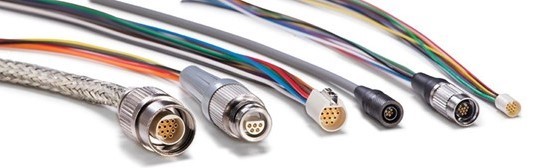 Figure 1. Miniature connectors. Source: Omnetics Connector Corporation
Although there may seem to be a myriad of COTS connectors that a designer can choose from, it is often necessary to design a custom connector to meet the specific needs of an application, such as its form factor, which defines its allowable size, shape and configuration. In addition to meeting form factor requirements, design engineers must overcome several other potential challenges to successfully implement a custom miniature connector design into their applications.
Challenges
Omnetics can assist electronic design engineers in several areas throughout the design, development, qualification and manufacturing phases as follows.
Design and packaging
Omnetics can assist customers by helping them select appropriate COTS connectors from their vast catalog of over 10,000 connectors or by assisting them in the design of custom connector solutions that meet the unique requirements of their systems. To assist their customers in the evaluation of connector solutions in their designs, Omnetics can provide 3D STEP files of their various COTS and custom connectors. These 3D models can be incorporated into 3D CAD models of electronic components so that optimum component designs can be developed. At the system level, Omnetics can assist their customers with the design of connector solutions within an entire electronic system, considering cable routing and interference issues. For example, moving mechanical assemblies, such as gimbals, can affect cable routing and wear due to potential abrasion.
Prototype development and testing
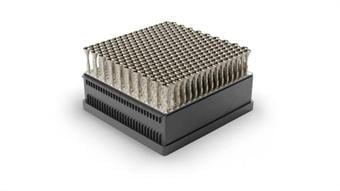
Once a design concept has been established, Omnetics can assist in the development and evaluation of one or more prototypes to ensure that the design meets all requirements. These prototypes can be developed by Omnetics using their in-house 3D printing machines or their extensive machining capabilities. Prototype development tests can be performed by Omnetics or by the customer to verify the form, fit and function of the connector design. Omnetics in-house capabilities include a variety of development tests to assess the prototype’s stiffness, strength, durability, compatibility and survivability when subjected to a variety of environments including static, dynamic, thermal, moisture, corrosion, electric and electromagnetic, among others. These tests may also indicate that different adhesives or materials may be required to ensure performance and survivability in their intended environments.
Manufacturing
Omnetics can ensure the successful manufacturing of miniature connector solutions by first evaluating them in a pilot or limited production line that enables analysis of issues such as design for manufacturability and to enable customers to quickly have production-like connector components for in-house evaluation. On some occasions these limited production runs can enable Omnetics to fine-tune production processes to ensure optimum performance and high quality of their connector designs. As a developer of their own contact designs, Omnetics designs their own automated equipment to perform crimping, which involves no hand tools or manual stripping.
Environmental and qualification testing
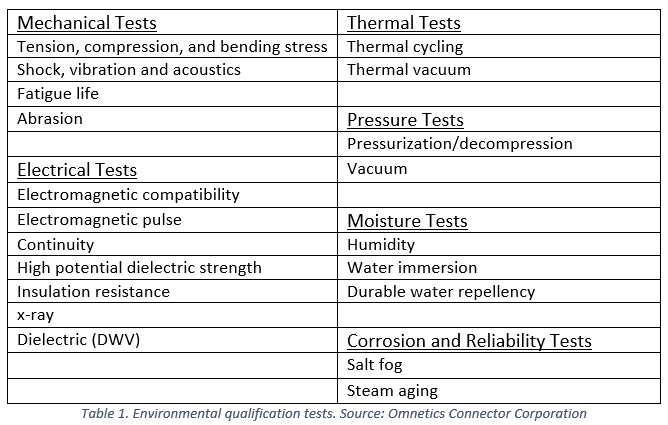
Custom connectors must be qualified for various environments, many of which are prescribed by military, aerospace, medical, quality or other industry-specific standards. Some of these tests are shown in Table 1, many of which Omnetics can perform in-house. These tests will further assure that the design is adequate for its intended environments and will also screen for potential quality problems that may arise during manufacturing. Omnetics engineers can assist customers in prescribing the appropriate tests and environments, identifying design alternatives that are proven for these environments, and running the tests. Alternatively, Omnetics can work with external resources and test labs to obtain an independent qualification of test items.
A military and law enforcement helmet case study
To paint a real-world picture, consider that a manufacturer of military and law enforcement helmets required connectors for numerous helmet-mounted accessories, such as cameras, lights and communications. Each of these connectors had specific requirements for power and signal, while having compact size, low weight, a high degree of flexibility, and waterproof sealing (Figure 2).
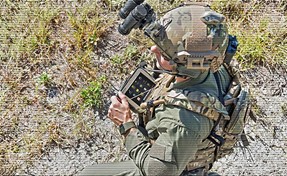 Figure 2. Helmet-mounted accessories. Source: Omnetics Connector Corporation
Omnetics worked with the manufacturer and developed breakaway connectors that did not have retention screws or latches to satisfy these unique requirements. This was accomplished by the use of toroidal springs and V-grooves for mating. Waterproofing was accomplished by use of an O-ring and inter-facial seal on the connector housing. Additional sealing on the backside of the connector was done with two stages of molds. A soft inner mold promoted adhesion and sealing followed by a second material that provided the required toughness, structure, strain relief and form factor. The Military/Law Enforcement Helmet connector was successfully implemented and met all of the requirements for size, weight, flexibility and waterproof sealing for numerous accessories. Features of this unique design were adapted for other applications (Figure 3).
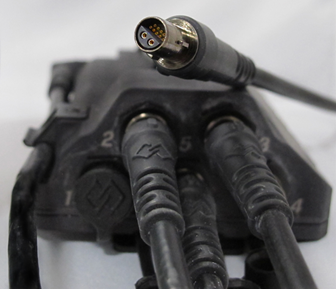 Figure 3. Helmet connector option. Source: Omnetics Connector Corporation
Omnetics overview
Omnetics Connector Corporation is a world-class designer, developer and manufacturer of micro-miniature and nano-miniature electronic connectors and interconnection systems. Omnetics connector products and solutions are used extensively in the medical, defense and aerospace industries. The company has over 10,000 commercial products, and is continually adding to their catalog through the development of custom products and solutions. With over 30 years of experience, Omnetics is based in Minneapolis, Minnesota, and has over 400 employees with a global presence across six continents. Omnetics is an AS9100 business that can manufacture products to several different standards, such as IPC 620, J-STD soldering, IPC 610, MIL-DTL-32139, AND MIL-DTL-83513. More information about Omnetics and their products can be found on the Omnetics website.