$36 Billion Sought for California’s Infrastructure
Engineering360 News Desk | January 25, 2016In his January 21 State of the State address, California Governor Jerry Brown renewed his call for an investment program to repair the state's deteriorating infrastructure, the "deferred maintenance" of which he estimated amounts to $77 billion.
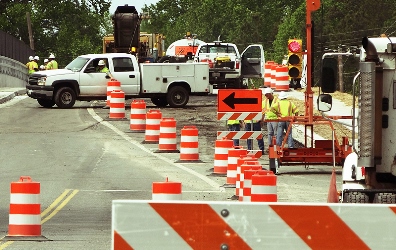 California's surplus is tagged to be spent on one-time investments to repair and replace aging structures. Image credit: Morguefile Brown proposes using $2 billion of the state's temporary surplus on one-time investments to repair and replace aging structures. In addition to transportation projects, he identified deficiencies in state office buildings, levees and state park facilities, universities, prisons and state hospitals.
(Read “Infrastructure Damage From Sinking Land Could Cost California Billions.”)
Earlier in January, Brown submitted to the state legislature his proposed 2016-17 budget, which includes provisions for a 10-year $36 billion transportation package, $16.2 billion of which is earmarked for highway repairs and maintenance. To help pay for the program, he proposed several revenue-raising measures, including adjustments to the state's gasoline and diesel excise taxes and a $65 fee on all vehicles that is expected to raise $2 billion annually.
Without investment, the Governor's office estimates that in 10 years' time, California's transportation infrastructure will deteriorate to the point that:
- 47% of California's 50,000 lane miles of pavement will either require preventative maintenance or be in a distressed state.
- A further 90 bridges will be distressed, increasing the total to 654 (out of 13,100 bridges total).
- 78,000 culverts, or 38% of the state total, will be in poor or fair condition.
- 20% of the state's 10,000 traffic management system elements—ramp meters, cameras, changeable message signs and loop detectors—will be inoperable.
The state legislature is tasked with passing California's 2016-17 budget in time for the new fiscal year which starts on July 1.