Google's Project Tango to Debut in Lenovo Smartphone
Engineering360 News Desk | January 25, 2016Lenovo is set to release a consumer mobile device that incorporates technologies developed by Google's Project Tango, a platform that uses computer vision, depth sensing and motion tracking to create on-screen 3D experiences. Available in summer 2016, Lenovo's Tango-enabled smartphone, using built-in sensors, can be used to capture the dimensions of a space or room—providing measurements that otherwise might be difficult to determine physically, such as where drapery rods meet the ceiling. Real-life objects, like furniture or appliances, can be mapped and displayed on the device to determine whether they will fit in a room.
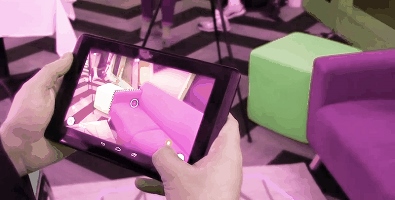 Lenovo's Tango-enabled smartphone can be used to capture the dimensions of a space or room. Image credit: Lenovo.The 3D mapping ability is intended to give Project Tango-enabled devices the ability to know where they are and how they move through space. Such devices can recognize places they’ve been before, like a home, office or public space. Project Tango motion tracking works indoors, allowing users to navigate through a shopping mall and even to locate a specific item on a shelf when guided by a store app.
The Tango platform permits the device to react to user movements. As such, it is anticipated that developers will create applications that may turn the home or other physical space into a game level or a virtual/augmented environment.