Researchers Develop an Epoxy Coating That Reports Stress
By Engineering360 News Desk | January 20, 2016The structural integrity of a component part can mean the difference between consistent performance and costly failure. In applications such as pipelines, failure could result in environmental damage. In automotive and airline applications, failure could result in injuries or even death. But the problem often is detection. While large areas of damage are easily spotted, small cracks and scratches are difficult to spot. Areas that are losing mechanical strength and performance as a result of stress are even more challenging to identify. While material inspections are valuable, failures often begin on a micro-level that’s difficult to detect until it’s too late.
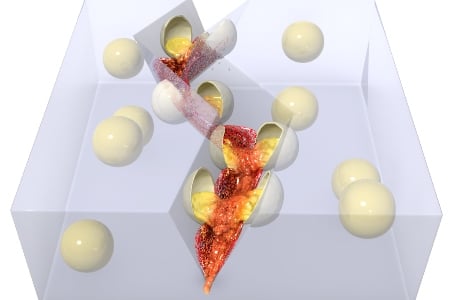 The researchers have created an epoxy resin embedded with microcapsules that contain a pH-sensitive dye. To create an early warning system for potential failure, researchers at the University of Illinois have developed a polymer damage indication system that can enable materials to report damage as soon as it occurs. The researchers have created an epoxy resin embedded with microcapsules that contain a pH-sensitive dye. The capsules rupture at the slightest damage, then react with the resin to change the color of the polymer to show the area affected. The coated part shows up as red where it’s been compromised as the capsules break due to stress or fracture. In addition, the color deepens to a darker shade when more extensive damage has occurred and as more capsules rupture at the site. This could give maintenance and repair crews an opportunity to mitigate damage before it can become significant.
The epoxy has been shown to work on a variety of polymer materials. It reacts on a microscopic scale: cracks of 10 micrometers, or about 1/8 the width of a human hair, are sufficient to cause a change in color. The epoxy can be used to coat a variety of substrates, including metal and glass. The research team envisions using the new coating in conjunction with self-healing materials. The coating could detect and report damage, while the substrate repairs the damage independently.