Water purification with eco-friendly polymer
Cari Cooney | January 03, 2023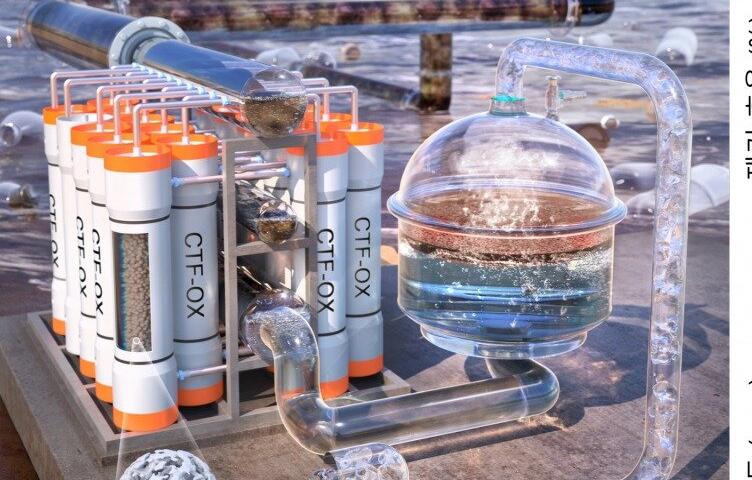 Credit: Daegu Gyeongbuk Institute of Science and Technology (DGIST)
A group led by Professor Park Chi-Young was able to create a unique porous substance that can remove all phenolic organic contaminants from water at very high speeds. Based on the photothermal effect, the new porous material can remove not only microplastics from water but also very small volatile organic compounds (VOCs).
In addition, it is likely to be used as a high-efficiency adsorption material to be sold in the future because its raw material costs are competitive and it can be used to clean water using the sun. Rapid growth in the chemical industry has caused a lot of water pollution, which is a big concern. To address this problem, many technologies and materials have been made to clean water.
Water purification quickly and cheaply
Existing adsorption mechanisms for carbon-based porous materials are not very effective because the rate of adsorption is slow and recycling needs a lot of thermal energy. Different materials have been made to improve the efficiency of contaminant removal, but it has been hard to make materials that are easy to recycle, work well, use raw materials efficiently and have the potential to be mass-produced.
Researchers at South Korea's DGIST Department of Energy Science and Engineering have now synthesized a porous polymer with good adsorption and photothermal properties by reacting a cheap and efficient precursor. Also, a second oxidation reaction was tested on the polymer and based on the findings, a hydrophilic functional group was added so that micropollutants in water can be taken up quickly.
Experiments also showed that the polymer does not need a lot of heat to be recycled and can be used repeatedly without losing its effectiveness.
Professor Park Chi-Young said, "The technology we developed here is an unrivaled water purification technology with the world's highest purification efficiency, removing more than 99.9% of phenolic microplastics and VOC contaminants in water at ultra-high speeds. We expected that it will be a universal technology with high economic efficiency that can purify contaminated water and supply drinking water even in areas where there is no power supply."
The research results were published in Advanced Materials.