A geothermal energy tutorial
S. Himmelstein | March 20, 2023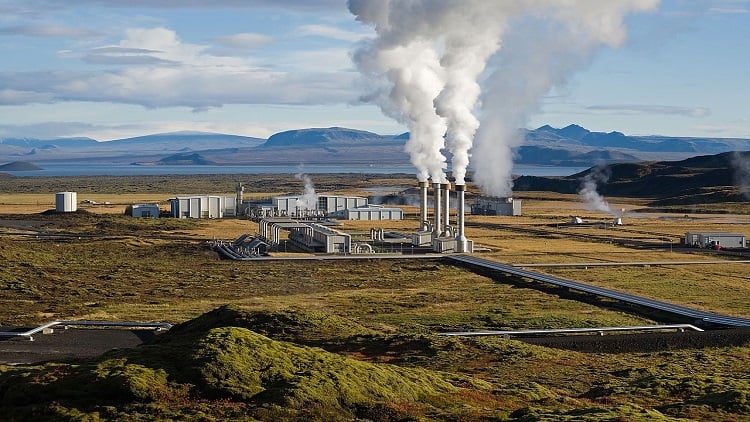 Steam rises from the Nesjavellir Geothermal Power Plant in Iceland. Source: Gretar Ívarsson
Geothermal energy is produced by accessing reservoirs of hot water several miles below the Earth’s surface. In certain parts of the planet, this water naturally breaks through the surface, creating hot springs or geysers.
When accessed via a well, this pressurized water rises up and rapidly expands into steam, which can be tapped to spin a turbine and drive an electric generator. Excess steam is condensed back into water as it passes through a cooling tower; an injection well pumps this water back into the Earth to ensure sustainability. The U.S. Department of Energy (DOE) asserts that development of enhanced geothermal system technologies and additional research in deep direct-use capabilities will markedly expand the accessibility of this resource.
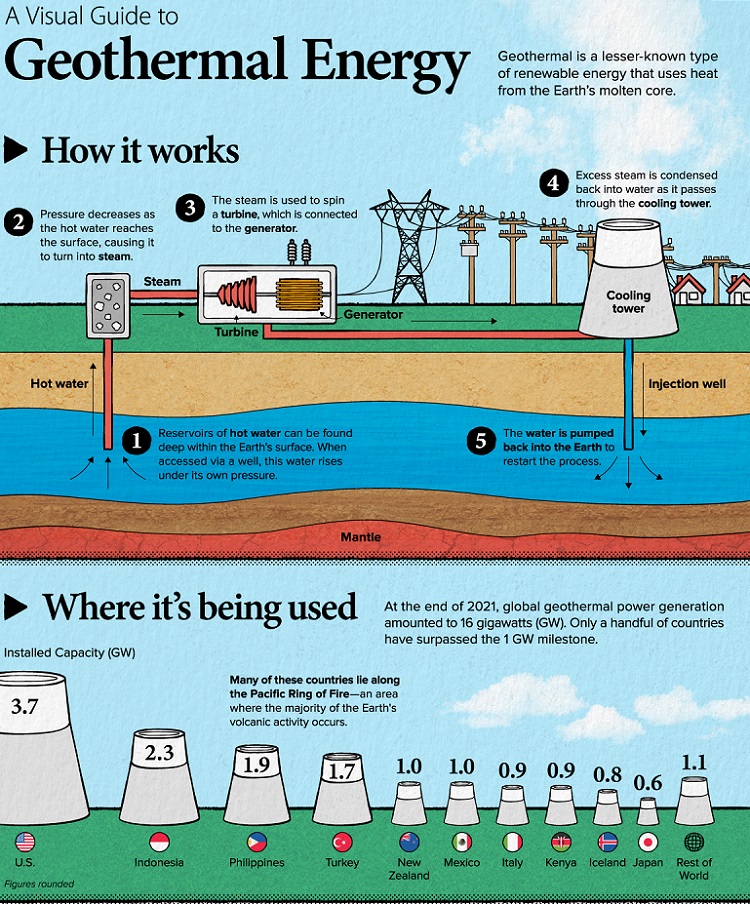 Source: Think GeoEnergy Research/DOE/IRENA/National Geographic
Geothermal power plants produce electricity consistently, running 24 hours a day, 7 days a week. The power output of a geothermal power plant is highly predictable and stable, thus facilitating energy planning with remarkable accuracy. These power plants are also an excellent means of meeting baseload energy demand.
As of 2021, global geothermal power generation amounted to 16 GW of capacity; only a few countries have surpassed the 1 GW milestone. The U.S. is the largest developer of this renewable energy resource, with 3.7 GW of capacity available from 61 geothermal plants.
[Browse suppliers of geothermal steam turbines and heat pumps on GlobalSpec.com]
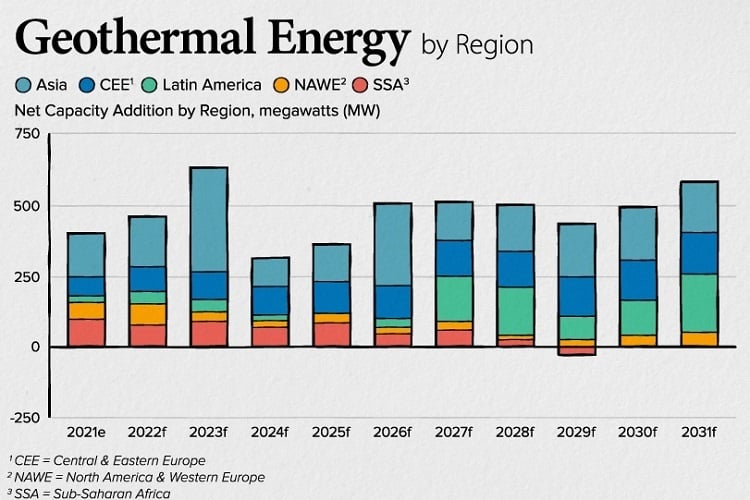 Source: DOE/IRENA/Fitch Solutions
According to the International Renewable Energy Agency (IRENA), geothermal energy accounts for only 0.5% of the 3,064 GW of global generating capacity derived from all renewable energy forms. The majority of new geothermal capacity gained in the next decade is predicted to be installed in Asia, with Indonesia, the Philippines and New Zealand identified as top markets.