New process promotes PVC recycling
S. Himmelstein | February 02, 2023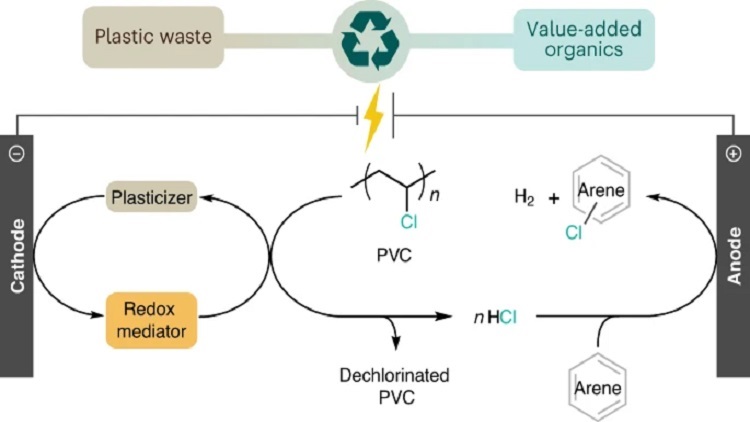 Schematic of the electrochemical process. Source: Nat. Chem. (2022). https://doi.org/10.1038/s41557-022-01078-w
Window frames, medical tubing, plumbing equipment — countless products used in every sector are composed of or include polyvinyl chloride (PVC). However, its utility is offset by a lack of recycling technology specific to PVC, which is the most produced plastic and least recycled in the U.S. The presence of toxic phthalates and other plasticizers has hampered efforts to devise suitable reuse routes, until now: University of Michigan researchers have devised an electrochemical process to safely repurpose PVC.
The heat treatments applied in conventional recycling methods release hydrochloric acid from PVC, which poses a health hazard and corrodes recycling equipment. The new approach eschews heat in favor of electrolysis reactions that break down the carbon-chlorine bonds in the material and exploits phthalates in the plasticizers as the mediator for the chemical reaction. The rate at which electrons are introduced into the system and which controls how quickly hydrochloric acid is produced is easily monitored.
Recovered hydrochloric acid can serve as an industrial reagent for other chemical reactions, and chloride ions can be applied to chlorinate arenes for use in pharmaceutical and agricultural components. The researchers will next identify uses for the additional components recovered by the process described in Nature Chemistry.