Reflective coating promises to reduce solar tile temps
Marie Donlon | October 13, 2022A reflective coating designed to improve the performance of solar tiles has been developed by researchers from Australia’s Western Sydney University.
According to its developers, the reflective coating reduces the tiles’ operating temperatures by 11° C and increases their electrical performance by around 6.6%.
 Source: Western Sydney University
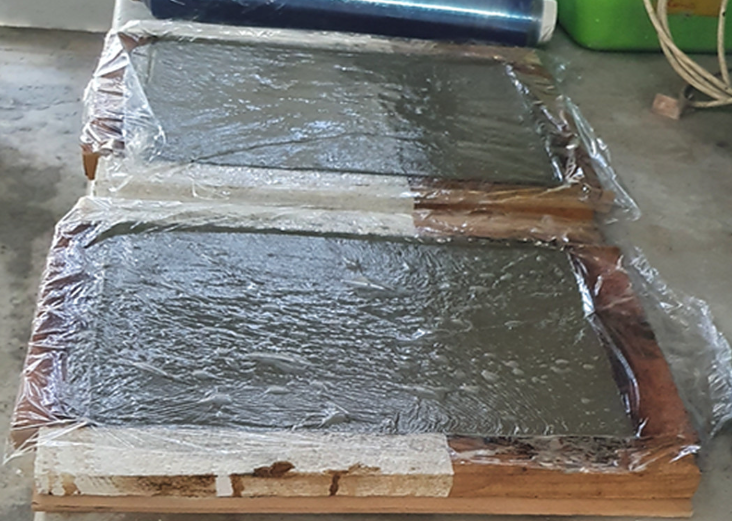
Testing an assortment of coatings against the Western Sydney University coating, the researchers prepared 27 mm thick mortar tile samples and coated them each with five commercially available reflective coatings.
“The mortar samples were first painted with one layer of coating, following the instructions given by the manufacturers,” the researchers said. “After that, the samples were cured in an oven at a temperature of 25° C for 24 hours before applying the second layer of coating. Then the samples were cured in the oven again for a further 48 hours at 25° C.”
Following tests conducted in a polystyrene control chamber featuring a metal halide lamp, the researchers determined that their coating outperformed the other reflective coatings, limiting the temperature of the tile to 63.6° C versus the worst-performing coating, which only achieved 74.9° C, the researchers explained.
This 11° C reduction in surface temperature has reportedly resulted in an electrical efficiency improvement of around 6.61%, according to the Western Sydney University team.
The study, Effect of reflective coating on thermal and electrical performances of solar roof tiles, appears in the journal Energy Conversion and Management.