Making a process measure up: Process optimization using flow meters and feeders
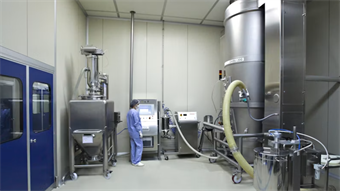
May 23, 2022 Figure 1: CentriFlow products. Source: Eastern Instruments
In nearly every process, within industries ranging from the milling and grain industry to the petrochemical and energy sector, there are locations where operations can be optimized or some process can be fine-tuned enough that the whole process will be more efficient, more cost effective and more reliable. Often, this fine-tuning can come in the form of a flow measurement or a flow control system that will either measure the flow rate of some component within a system, or that will control the flow of that component. When determining the correct flow measurement/control system for a process, it is good to keep in mind what is expected to be accomplished with the addition of a piece of equipment. After all, pinpointing what the equipment is for will help determine whether a customer is looking for a flow meter to measure the flow of a product, or whether they are looking for a flow control device (a feeder) that will control the flow of a product.
Solids flow measurement
Flow measurement offers a window into the process — a way to peer in and see what is really happening. A proper flow measurement, for example, allows users to see the amount of plastic pellets received by railcar, or how many widgets were able to be made from those pellets. Users will be able to see how well optimized a grain dryer is working or how efficiently a ball mill is performing.
“Load-in” is a perfect location for the use of a flow meter as incoming product is offloaded from trucks or railcars. It is quite important to measure this incoming product so that it is known how much product is being received, particularly when the product is paid for by weight. Especially now, as price increases seem to happen daily, it is difficult to rationalize paying for amounts of product that were not received. Typically, during the unloading process, the flow rate of unloading is not especially important, just the total amount that is being unloaded. That is why a flow meter (that measures the flow rate and total) would be a more practical choice, rather than a feeder (that controls the flow rate). In fact, a mass flow feeder may even slow the unloading process by limiting the flow at which the truck/railcar is being unloaded.
Another particularly useful function of a flow meter is to monitor and maintain the proper function of various pieces of equipment. In many instances, mills, extruders, mixers or other pieces of equipment work most efficiently at a particular flow rate. Flow meters can be used at the intake of these devices to ensure the consistent flow rate of material into them. At the same time, flow meters can be used at the discharge of these devices to verify the output. This is particularly useful when talking about equipment such as dryers or chillers that will change the physical properties of the product run through them. For example, as grains move through the drying process, moisture is removed. The result is a loss of mass. A good way of ensuring that the dryer is working as efficiently and consistently as possible is to measure the product both entering and exiting the dryer to ensure that the moisture loss (and thus, the drying process) is consistent over time. If the comparison of the intake flow versus the exit flow from the dryer is inconsistent, that may be a signal that the dryer is working incorrectly or that there is a problem within the larger process.
Finally, measuring the finished product, as it exits the process or during loadout, is extremely important to the overall efficiency of the process. Measuring the finished product offers insight into how much capacity a plant has, as well as offers trends on overall production. Also, by measuring the incoming product and the finished product in conjunction, users get the added benefit of being able to compare the two measurements so that they can gauge how efficiently the entire process is running. Measuring the total amount of product being loaded into railcars and trucks during loadout is also extremely important to the efficiency of a loadout process. By measuring the finished product as it enters railcars and trucks, users can ensure that they are filling these vehicles to capacity (not underfilling and thus, having to fill extra vehicles), or even worse, overfilling them and having to waste precious time by removing product from them.
Solids flow control
If flow meters offer a window into a process, then mass flow feeders are doors that offer direct access and interaction with the intricate details of the process. Mass flow control devices such as mass flow feeders often work by controlling the process based on total throughput (in a batch style process) or controlling based on flow rate (in a continuous style process). Mass flow feeders are useful for a variety of applications including blending/batching various products together or for controlling the flow rate of product to ensure the proper function of specific pieces of equipment.
As mentioned earlier, flow meters can certainly be used to verify the proper function of various pieces of equipment (by measuring product as it enters the equipment and again as it exits). Sometimes, however, processes are so dynamic (meaning that they change so frequently) that flow rates into key pieces of equipment can be quite inconsistent. Even with a flow measurement, the flow could continue to fluctuate, causing inconsistencies in the operation of equipment. This fluctuation is especially evident during atypical process functions such as during ramp up and wind down operations. For such variable flow processes, it may be more practical to implement a mass flow feeder especially at the intake of critical equipment such as mills. By controlling the flow of material entering the mill, users will remove any inconsistency that an unpredictable flow could present. Users will also ensure more efficient machinery operations and thus, more consistent, and higher quality end-products.
Another great use of mass flow feeders is for the batching or blending of different products. Sometimes, the processes can be continuous. In such cases, several mass flow feeders can be used in conjunction to accurately blend a ratio of ingredients. The mass flow feeders are often installed at the discharge of silos or bins, and a constant and controlled flow rate is discharged from the selected bins to achieve the desired blend. The same effect can be achieved if the process is not continuous, but rather is a batching process. In such a case, each of the multiple mass flow feeders would allow a pre-specified amount of each product through the individual feeders before the valves are shut off and the flow is stopped. The mass flow feeder would control based on total in this case, rather than flow rate, however, the result would be the same: a perfect ratio of various products for a more consistent and uniform end-product.
The solution
Whether optimizing a process with a flow meter or a feeder, Eastern Instruments has a solution that will fit a particular application. Their complete line of mass flow meters, called CentriFlow Meters, is especially suited to the mass flow measurement of granular products, powders or even irregularly shaped materials. Offering a variety of options, flow surfaces and price points, CentriFlow mass flow meters are gravimetric in-line mass flow meters which measure flow based on a centripetal force-based measurement design. Offering either remote electronics or an integrated electronics design, the CentriFlow meter will output both flow rate and total for extremely accurate control of a process.
The CentriFeeder from Eastern Instruments, which is especially suited for granular materials, offers both a flow measurement and controlled flow in a single device. The CentriFeeder works by building on the foundation of the CentriFlow Meter and then adding the functionality of a PID controlled slide gate that controls both flow and total. This slide gate will modulate in order to maintain a controlled flow rate or will shut off after a set point (total) has been reached for batching or filling. The standard outputs for the CentriFeeder include both flow rate and total. However, because the feeder can accurately measure the flow rate of material and Eastern Instruments is able to determine, with precise accuracy, the position of the control valve, the feeder will also output a live bulk density reading as well. The outcome is an easily maintained, consistent flow that can be controlled over a large turndown with exceptional accuracy.
Sometimes a process dictates whether a user needs a flow meter or a feeder. Sometimes, it is more difficult to decide. Either way, Eastern Instruments is here to help. Visit their website for more information.