Mass-Stream Thermal Mass Flow Technology
Chris King, Bronkhorst USA | February 16, 2018Sponsored content
This article will describe what CTA thermal mass flow meters are; the conventional type and their applications; and what makes Mass-Stream™ technology different.
What is a Conventional Constant Temperature Anemometer (CTA) Thermal Mass Flow Meter?
The CTA thermal mass flow meter works via a sensor with probes that are inserted into the gas stream in order to directly contact the flowing gas. One of the sensor probes is a heater and the other one is a temperature probe.
When the instrument is powered up, a constant difference in temperature (ΔT) is created between the two sensor probes. The heater energy required to maintain this difference in temperature is dependent on the mass flow. The working principle is based on King’s law of the ratio between the mass flow and heater energy. What that means is the higher the flow, the more energy is required to maintain the chosen ΔT.
A conventional CTA thermal mass flow meter is installed by inserting the long probes through the pipe wall and into the gas stream. The probes are passed through an insertion port in the pipe. The head of the instrument is above the outer wall of the pipe. Common characteristics of CTA thermal mass flow meters include no moving parts, a low pressure drop across the instrument and no need for additional temperature or pressure compensation.
Where are Conventional CTA Thermal Mass Flow Meters Used?
Processes where gas flows in pipes are places one will find CTA thermal mass flow meters. The rugged nature, no moving parts and low pressure drop are beneficial for measuring gas flow in industries like midstream and upstream oil and gas, wastewater treatment and steel. The types of applications where these flow meters are used include applications with gases such as methane, propane, argon, compressed air, coal emissions, carbon dioxide, ammonia and others.
Typically, a CTA thermal mass flow meter is a good choice when the gas has the potential to be dirty or includes some moisture, as the through-flow nature of the technology can be more forgiving to contamination than other flow meter technologies.
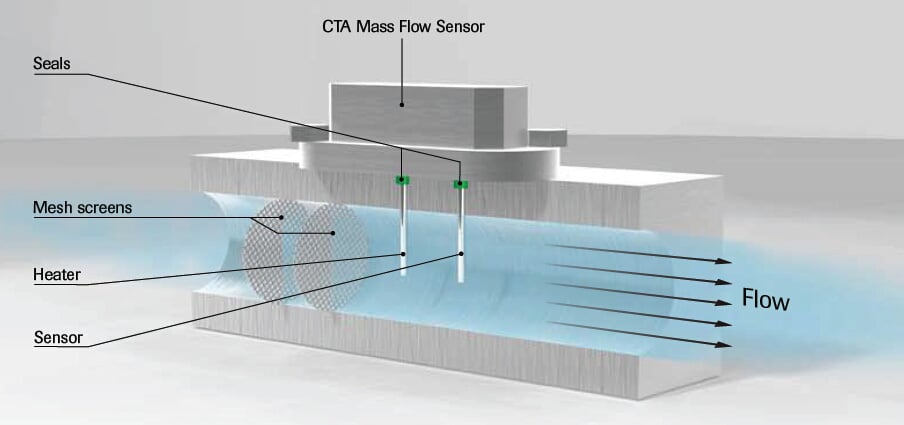 Figure 1. Position of a CTA mass flow meter in a process stream. Source: Bronkhorst High-Tech B.V.
Mass-Stream Thermal Mass Flow Meters
Also based on CTA thermal mass flow technology, the Mass-Stream flow meter or controller differentiates itself from conventional CTA flow meters on several points.
1. In-Line
The Mass-Stream instrument is not installed using an insertion port through the wall of a pipe. Rather, Mass-Stream is an in-line flow instrument. That means that the instrument itself is connected between two ends of the tube or small pipe and effectively becomes part of it.
Unlike the conventional CTA thermal mass flow meter, Mass-Stream is a compact instrument where the main circuit board housing and sensor sit on top of the flow body, through which the sensor probes project. An inline instrument allows for the use of CTA technology in applications using tubes and small pipes.
2. Flow Rate
As mentioned earlier, the Mass-Stream flow meter or controller is an instrument that is mounted in the line of the tube or small pipe. Applications that use tubes for flowing gas are ones where the flow rate is low.
Of course “low” is a subjective term, so as an example the lowest Mass-Stream flow range is 10-200 mln/min, but the flow meter family can go as high as 5,000 ln/min.
3. Control
Perhaps the most important difference between Mass-Stream and conventional CTA thermal mass flow technology is that Mass-Stream is available as a meter (as are all the others) or as a thermal mass flow controller.
The Mass-Stream thermal mass flow controller is a complete control loop. It measures the gas flow, has an onboard PID algorithm and it provides a control signal to an electrically and mechanically connected control valve. All it needs is a set point signal and it will precisely control the gas flow. It is a complete control loop that can easily fit in one’s hand.
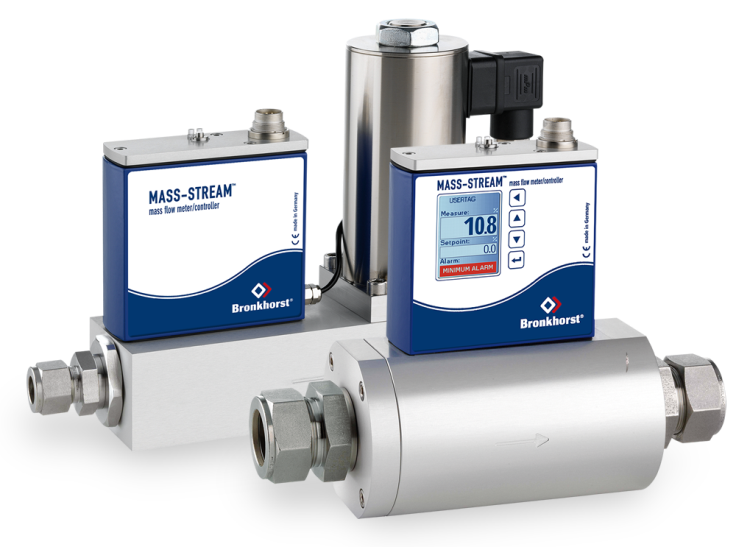 Figure 2: This meter, available as a flow meter and flow controller, serves applications ranging from process industries to food and beverage to pharmaceuticals to medical and chemical and beyond. Source: Bronkhorst High-Tech B.V.
Conclusion
Conventional CTA thermal mass flow meters are well-suited to conventional applications, but none are designed for low flow rates or provide a complete control loop like the Mass-Stream. This solution serves applications ranging from process industries to food and beverage to pharmaceuticals to medical and chemical and beyond.
Mass-Stream technology is usable for virtually any kind of gas or gas mix, provides precise control and is very compact and robust. To learn more about Mass-Stream and whether it’s the right meter for your application, please contact us by mail or visit www.bronkhorst.com.