
Video: New hydrogen storage tech to be piloted in UK
S. Himmelstein | February 28, 2022As a participant in the U.K. Longer Duration Energy Storage Demonstration program, Australian hydrogen storage developer Carbon280 will trial a potential technology for the efficient transport and storage of hydrogen.
The Hydrilyte refueler contains a non-toxic, non-reactive metal dust suspended in mineral oil to which hydrogen bonds as a hydride and is released in a dehydriding process. The system provides a convenient and intrinsically safe way to store hydrogen at normal atmospheric temperatures and pressures.
The demonstration will examine the feasibility of storing the gas in Hydrilyte at a hydrogen hub,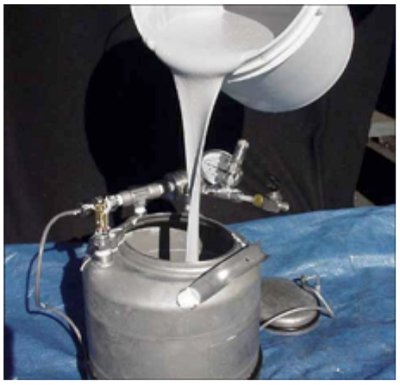 Hydrilyte being poured. Source: Carbon280 transporting the Hydrilyte using standard fuel tankers and releasing the hydrogen into a refueling system. The initial phase of the project will deliver a feasibility study for the refueler and if successful, the next phase will focus on prototype development by 2024 at the planned Holyhead hydrogen hub in north Wales.
The project consortium includes Netherlands based long-duration storage specialists Corre Energy, hydrogen fuel specialist Element 2, Welsh community organization Menter Môn, and Energy Reform, which will provide energy systems modeling input.
According to Brendan Bilton of Element 2, compressed hydrogen simply does not offer the scalability as a hub-to-station hydrogen carrier, with around 500,000 heavy goods vehicles (HGVs) on U.K. roads. “The limitation on volume of hydrogen practically limits the number of trucks that a truck stop can service to around eight to 10 HGVs per day. Hydrilyte has the potential to provide a safe and scalable alternative that will enable the U.K. to lead the world in the transition from diesel to hydrogen-powered heavy vehicles by 2030.”




How much does it cost at the pump? How much cheaper than other methods?