Plasma gasification can cure COVID biomedical waste ills
S. Himmelstein | February 23, 2022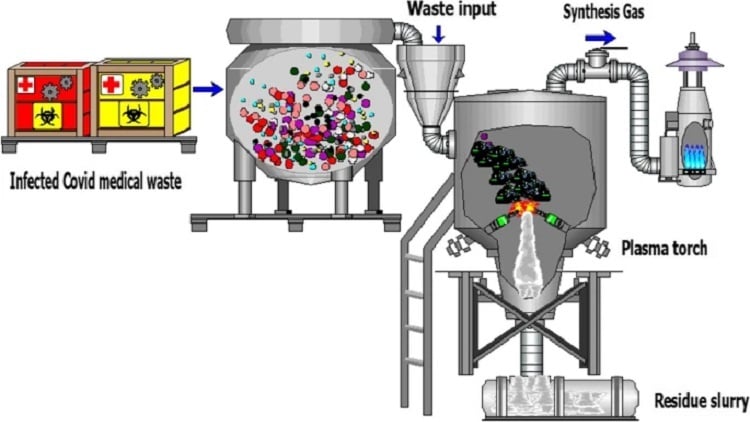 The process deactivates infectious waste and yields valuable synthesis gas. Source: Kaushal, R., Rohit and Dhaka, A.K./ Biomass Conv. Bioref. (2022) https://doi.org/10.1007/s13399-022-02434-z
The volumes of discarded personal protective equipment, syringes and other forms of biomedical waste generated worldwide have increased significantly in the wake of the COVID-19 pandemic. The waste management problem is particularly acute in India, which is projected to generate around 775 tons per day of biomedical waste in 2022. The potential contribution of plasma gasification technology to the eradication of this problem in India and other areas impacted by underdeveloped waste management infrastructure was analyzed by researchers from the National Institute of Technology Kurukshetra and the Indian Institute of Technology.
This approach to the high-temperature decomposition of waste converts the input feedstock into a valuable synthesis gas. The reaction occurs at a temperature as high as 6,500° C and can handle hazardous and non-hazardous waste, making it suitable for managing biomedical waste. Compared with conventional gasification, plasma gasification effectively deactivates or destroys harmful infectious agents, radioactive materials and radicals due to the high temperatures applied.
An added benefit is the production of syngas with low tar and high hydrogen concentrations, which can be used to replace traditional fuels in compression ignition engines. Scrap metals recovered in molten form after waste treatment can be recycled, and vitrified slag byproduct can be exploited as building aggregate material.
The only major process limitation cited in Biomass Conversion and Biorefinery: plasma gasification is energy-intensive and is associated with a lower average energy efficiency relative to conventional gasification.