Scientists aim to keep underwater pipelines open using neutron-based technique
Marie Donlon | February 14, 2022A team from the Research Neutron Source Heinz Maier-Leibnitz (FRM II) at the Technical University of Munich (TUM) has discovered that neutrons could be key to locating clogs in underwater oil and gas pipelines.
Pipeline clogs usually form when the mix of oil, gas and water transported over long distances underwater and deposited to storage and production facilities on land turn viscous and eventually into a solid-like substance. When the mix cools, such as during pipeline shutdowns, the gas and water can form solid hydrates that plug up the pipeline.
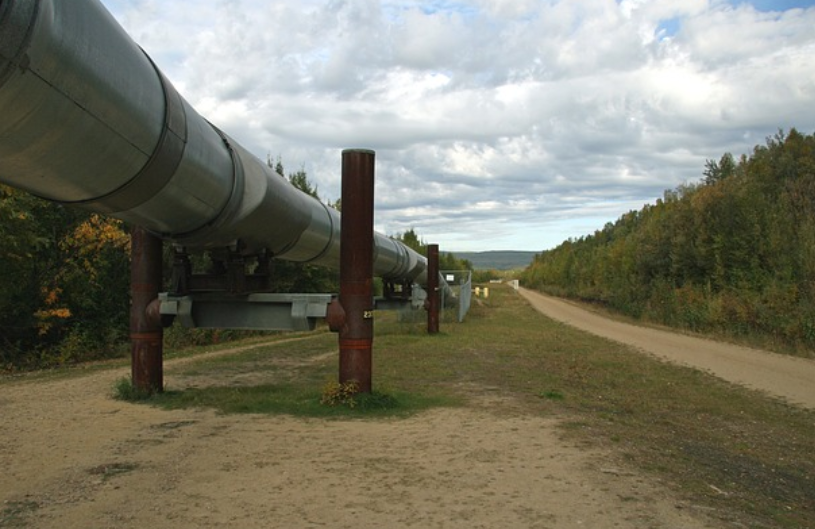
Instead of turning to current methods — primarily thermal imaging cameras and gamma rays — used for detecting such pipeline clogs that occur in pipelines on land, the team is turning to ultrasound technology, which can penetrate water. However, the team determined that ultrasound technology can only detect clogs at close range, from outside of the pipe wall. Yet, underwater oil and gas pipelines can be up to 2,000 m deep underwater and typically covered in seabed materials. Likewise, it is challenging for researchers to distinguish between the acoustic impedances of the hydrate phase and other phases of the crude oil mix held within the pipe.
As such, TechnipFMC, a company that specializes in subsea pipelines, turned to neutrons — subatomic particles — to function as a probe dubbed Prompt Gamma Activation Analysis (PGAA).
"Using prompt gamma neutron activation analysis, light atoms and hydrogen in particular can be detected very precisely," the researchers explained. Further, the team suggested that because the hydrogen content of hydrates and oil or gas is significantly different, blockages should be detectable via measurements of hydrogen concentration.
The team reportedly employed the PGAA instrument, which uses cold neutrons from FRM II, and established that the technique can be used to distinguish between oil and gas and the blockage.
"Our experiments have shown that we can even distinguish an incipient blockage from a fully developed one," explained the researchers. "That's very beneficial, because then one can even preventatively heat a pipe segment to melt the blockage before it fully develops."
The article, Detection of hydrate plugs inside submarine pipelines using neutrons, appears in the journal Nondestructive Testing and Evaluation.