New tool helps builders choose low carbon truss materials
Amy Born | December 26, 2021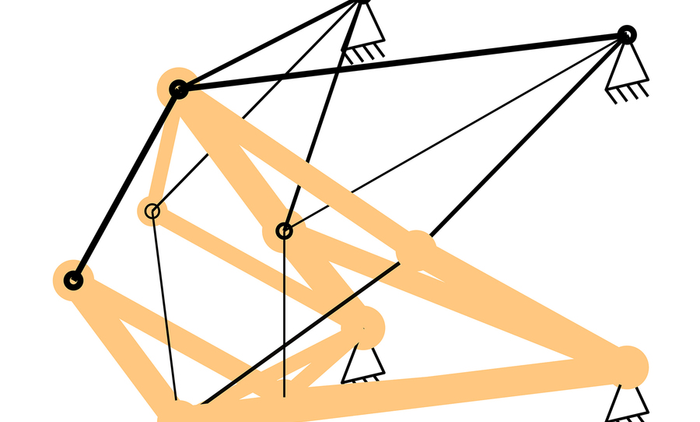 Researchers at MIT have created a set of computational tools to enable architects and engineers to design truss structures in a way that can minimize their embodied carbon while maintaining all needed properties for a given building application. Source: Ernest Ching, Josephine Carstensen et. al
The materials used in building construction contribute to global warming through their embodied carbon, which includes the fuel used to produce them and transport them to a building site, as well as the equipment used for the construction.
Not much quantitative research exists to help builders choose materials based on how well they minimize their contribution to global warming. Now, however, MIT researchers have developed a set of computational tools based on a detailed analysis to assist architects and engineers in designing a key element of building construction: trusses. Trusses are used to support beams in large buildings and in a wide array of modern construction, including antenna towers. They are typically made of wood or steel, or a combination of the two.
The tools allow architects and engineers to evaluate the environmental impact of the truss material used for a specific building application. Wood generally produces a lower carbon footprint, but in some places the properties of steel provide maximum benefit and an optimized result, according to the researchers.
“Construction is a huge greenhouse gas emitter that has kind of been flying under the radar for the past decades,” said MIT assistant professor of civil and environmental engineering Josephine Carstensen. Recently, however, building designers “are starting to be more focused on how to not just reduce the operating energy associated with building use, but also the important carbon associated with the structure itself.”
To reduce the carbon emissions of truss structures generally requires either substituting the materials or changing the structure, Carstensen added, but until now, very little has been available to assist with making these determinations.
The MIT system uses topology optimization. Basic parameters, such as the load amount to be supported and the structure dimensions, are input. Global warming impact, or other characteristics such as weight and cost, can then be evaluated to create optimized designs.
Carstensen explained that timber is the better choice for reducing emissions in a structure that doesn't have any tension (the tendency to pull the structure apart). A tradeoff is that “the weight of the structure is going to be bigger than it would be with steel,” she said.
The tools can be applied at various stages from planning to finalizing the design. The team was able to demonstrate a significant savings in embodied greenhouse gas emissions without performance loss.
The paper that describes the analysis is published in the journal Engineering Structures.