
Where are the electric convertibles?
Bojan Popic | June 22, 2021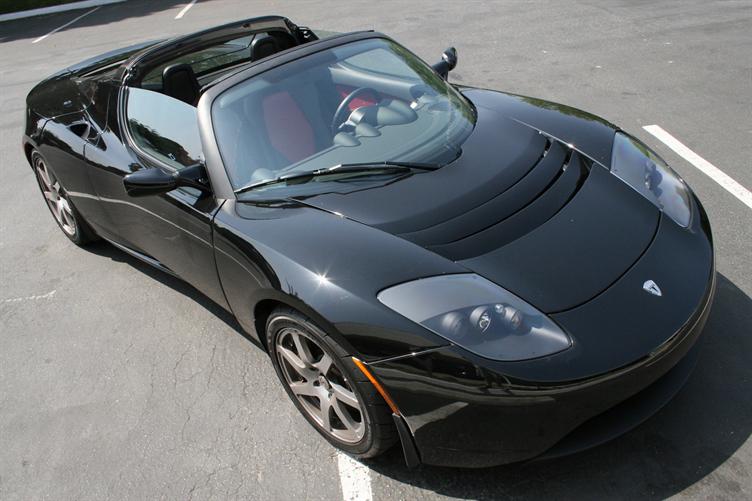 The Tesla Roadster debuted in 2008, and remains one of the few publicly available EV convertibles. Source: Conrad Quinly-Harper/CC BY-NC-SA 2.0
Earlier this year, automaker VW made noise with its concept MEB platform. The idea is that this chassis would serve as the basis for a family of related electric vehicles (EVs), including a convertible.
Convertibles have long held the imaginations of auto owners. A sunny day with the top down appeals to many motorists – or at least it used to.
Despite the increased focus on smaller, lighter vehicles, which optimizes EV power and range, this hasn't been a boon to the convertible. It seems manufacturers are building less convertibles than ever, but that is largely due to decline market demand for such vehicles. Buyer preferences have shifted significantly since the convertible highs of the 1960s and 1970s, for several reasons.
Pros of drop-top EVs
Be it a convertible or SUV, all EVs share a few prominent advantages. Of note, EVs are generally easy to operate and drive. Their electric motors offer rapid power delivery and sporty, responsive driving. They also have a much smaller carbon footprint than their combustion engine cousins. Finally, EV maintenance is quick and simple, as the powertrains require minimal maintenance, and bi-annual and quarterly oil changes are exchanged for a battery swap, typically at five to ten years time.
(Learn more about DC electric motors on GlobalSpec.)
The maintenance aspect is an important differentiator for convertibles. Many of them will only see occasional or seasonal use, so a more reliable vehicle that will operate as expected after months of sitting will be important. Owners will just need to ensure the battery maintains a healthy charge.
Another potential benefit of a convertible EV is the sound – or lack thereof. An open top car is a noisy environment when powered by an internal combustion engine. EVs are much quieter, and it means a more pleasant, lazy cruise that is ideal for the convertible style.
Convertibles have a couple other advantages. They offer supreme visibility, offering drivers the opportunity to thoroughly clear all blind spots. Blind spots have been an occasional problem in EVs that at times have used unconventional window layouts, such as the Nissan Leaf or Hyundai Ioniq. Finally, convertibles can offer more head room for large drivers, albeit only with the roof open.
Cons of drop-top EVs
A majority of modern vehicles have a monocoque chassis, in which the roof is an integral component that helps ensure structural integrity. Convertibles have the floor section as the only link between the front and rear side of the car. To ensure their vehicles are rigid enough, manufacturers have to use larger structural members when designing floor pans. This additional framework makes convertibles heavier than their roofed counterparts, meaning they require more power when speeding up. In addition, a folding roof mechanism will also contribute to weight increase, especially when made from metal or fiberglass. Needless to say, the result of this is a reduced range, especially in city and other stop-and-go traffic.
Another important aspect is the aerodynamics, where manufacturers try to reduce the wind drag of their vehicles as much as possible. Because of this, most EVs will have specially shaped rims and other design features that make them more streamlined. When traveling at speed, the passing air over an open passenger compartment will generate substantial turbulence. This increases wind drag and makes the vehicle less aerodynamic, which again has a negative impact on the range.
Ultimately, EVs are still very early in development, and manufacturers are prioritizing range and power density over other features.
Who would enjoy having an EV convertible?
All convertibles are a compromise between the open-air experience and suitability for daily usage, regardless of the power-train they use. Most drivers will enjoy relaxed cruises without a roof on warm summer days, but this comes at a certain cost. A retractable mechanism that lowers the roof into the trunk takes away cargo space and makes back seats less spacious. And unless they have folding metal tops, convertibles may be unsuitable for areas where winters are harsh and cold. These are reasons that make such vehicles less suitable for certain applications, such as being a family car. Instead, many drivers will select them as a second car and use them for relaxed cruises and leisure.
An EV could be an ideal for such a specific application, as its upsides will be even more prominent. As there is no engine-related maintenance, like oil changes or tune ups, it offers low running costs. And unlike all gasoline-powered cars, it has no problem with being left unused for a longer time. This means almost no preparations are needed if storing it in a garage over the winter. On the other hand, range and charging times may be less relevant for owners who only occasionally use their convertibles.
(Learn more about battery charging on GlobalSpec.)
Why OEMs are keeping away
Big EV manufacturers are not rushing into this market segment, despite its apparent potential. Tesla's first EV was indeed a convertible, but that was a vehicle developed from a Lotus platform, and Tesla has not offered a convertible since.
As just mentioned, original equipment manufacturers (OEMs) are still perfecting their technologies to offer a comparable range and power density as consumers have become accustomed to in combustion vehicles. And convertibles, with the additional weight and poor aerodynamics, start with a range debt. Also, because EVs are still gaining footholds in the market in general, mass produced EVs are aimed at the average driver – not someone looking for a leisure or second car.
Still, it may be easy to conclude that things will change soon enough. EVs are slowly becoming more common for different models and niche applications. The electric pickup truck is a good example. At one point, people openly questioned if an EV pickup was feasible – and now the Tesla Cybertruck and Ford F-150 are both set to release next year.
Slowly but surely, manufacturers will begin to offer a range of vehicles, with each being suitable for a different application. Today, this is an electric pickup truck, but a battery-powered convertible may just be waiting around the corner.
Conclusion
Drivers searching for a stylish and seasonal EV will likely need to continue to wait, as currently there are no new models rolling off the assembly line with a ragtop, droptop or even T-top design.
About the author
Bojan Popic is an automotive journalist from Croatia. He has 10 years of experience in hands-on automotive diagnosis, maintenance and repair. He earned a master's degree in mechanical engineering from the Faculty of Mechanical Engineering and Naval Architecture in Zagreb, Croatia.


Convertibles have long held the imaginations of auto owners. A sunny day with the top down appeals to many motorists – or at least it used to.
Some of us still like convertibles, if anyone asks...
I had one! I converted a 1979 VW Bug ragtop to electric. And what a great experience; cruising silently with the wind blowing thru my tattoo and all the girls waving and smiling...