
Green solvent represents battery recycling breakthrough
S. Himmelstein | June 07, 2021An organic solvent-based process developed at U.S. Oak Ridge National Laboratory (ORNL) offers scope for keeping old batteries out of landfills and strengthening the domestic supply chain for manufacturing new ones.
At the end of their service life, lithium-ion batteries are typically broken down by smelting, an expensive, energy-intensive process that releases toxic gas. The more environmentally friendly wet chemical process engineered at ORNL uses triethyl phosphate to dissolve the binder material that adheres cathodes to metal foil current collectors in these batteries.
The method was demonstrated to recover active nickel-manganese-cobalt cathodes, graphite, clean metal foils and other materials that can be easily reused in new batteries.
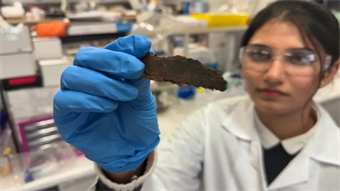
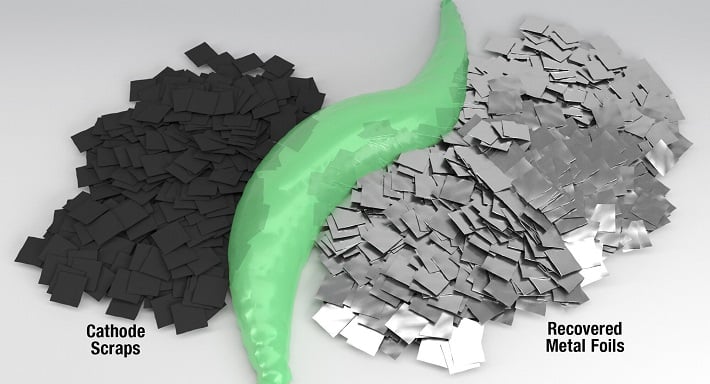 The green solvent enables environmentally friendly recycling of valuable lithium-ion battery materials. Source: Andy Sproles/ORNL
A paper on this research is published in ACS Sustainable Chemistry & Engineering.
There seems to be no mention of cost, the most important element....
In reply to #1
Mustn't release any CO2 else there would be heaps about the climate change and warming. Agree, it is against the mantra to mention cost compared to raw materials.