New strategy streamlines car battery recycling
S. Himmelstein | November 13, 2023Cathodes from end-of-life electric car batteries may be recycled with a process developed by U.K. researchers that is less energy-intensive and uses less hazardous chemicals than current methods.
Battery recycling methods typically focus on recovering elements by dissolving battery cathodes using strong The process was applied to a Nissan end-of-life battery. Source: AdobeStock acids, which present disposal challenges. These processes also rely on battery shredding, which combines components and creates a mixture of chemistries that can only be separated by chemical processes.
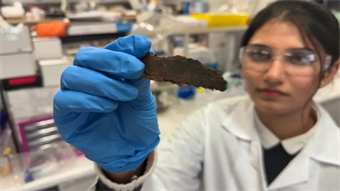
The new method devised by researchers from the University of Liverpool and the University of Birmingham uses ascorbic acid — Vitamin C — or other organic acids as the leaching agent. When applied to an end-of-life Nissan Leaf battery, the process was demonstrated to selectively leach low-lithium manganese oxide, a low-value spinel electrode material, from mixed cathode electrode material. The higher value nickel and cobalt-based material remains in a solid state and can be directly recycled.
Researchers will now look to scale up the process described in ChemRxiV.