
Watch how a solar sponge soaks up water impurities
S. Himmelstein | April 06, 2021Passive solar-centric systems have been developed for water purification purposes and largely rely on evaporation and condensation processes. A less time-consuming technology engineered at Princeton University uses an inexpensive flat sponge-like device that absorbs water from a lake or other source and releases purified water when subsequently exposed to sunlight.
Inspired by the swelling and deflating behaviors of the pufferfish, the solar-activated sponge filter is envisioned for off-grid use for the provision of potable water. The device could be placed in a water source in the evening and set in the sun the following day to release purified water. The easily synthesized elastic 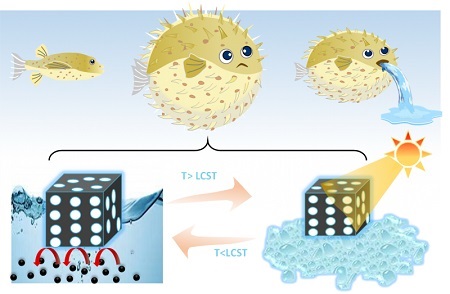 The pufferfish inspired the design of a solar-powered water filtration method. Source: Xiaohui Xu/Princeton Universitythermo-responsive gel can treat water contaminated with petroleum products, heavy metals and pathogens.
The polymer gel with a mesh-like microstructure is encased in polydopamine, which in turn is layered with a clear coat of alginate. The material maintains its ability to filter water for at least 10 cycles of soaking and discharge with no detectable reduction in performance, indicating potential for repeated use.
At room temperature, the gel functions as a sponge, soaking up water and releasing it when the material is heated to 33° C. The researchers tested the solar sponge by placing it in a microbially-contaminated New Jersey lake with a water temperature of 25º C. When removed after an hour and placed in sunlight, the gel heated up to 33º C over the course of another hour, releasing water free of toxins and pathogens.
The research is published in Advanced Materials.



Wawo! My goodness! What a break through! There parents should be happy that they raised such clever kids. It's a pity their parents never told them about water purification tablets that do not rely on solar, when its pouring with rain, do not rely on elevated temperatures when it only 5C outside and don't have 24 hrs to wait for a cup of tea.
25 Liters of water, weather not dependent, two tablets or a table spoon of bleach. Apply tablets, or bleach, stir well, leave to stand for 20 minutes. The 20 minutes is essential as this time is needed to make a fire to boil the water to make a cup of tea.
However, I think in this case, they will die of thirst, hypothermia, and confusion as I doubt they will have some tech device to make fire for them, to boil the water. Perhaps they can design an app for the cell phone to create a virtual fire.
Really, we spend thousands of $$$ on complicating the simple and think we have a breakthrough? Lovey little fish tank though, great for catching tiddlers for a fish sandwich. Is it supplied with a net or is that extra?