Video: Protective shell improves methanol fuel cell performance
S. Himmelstein | December 11, 2020Direct methanol fuel cells are being advanced as a cost-efficient alternative to hydrogen fuel cells, as methanol is associated with fewer transport and storage logistical roadblocks relative to hydrogen. However, these systems are prone to methanol crossover, resulting in fuel cell performance degradation and cathode catalyst poisoning as the methanol passes from the anode to the cathode through the membrane. Coating platinum catalyst nanoparticles with a protective carbon layer has been demonstrated to prevent these system stability issues.
Researchers synthesized a carbon-encapsulated platinum cathode catalyst by heat treatment of platinum-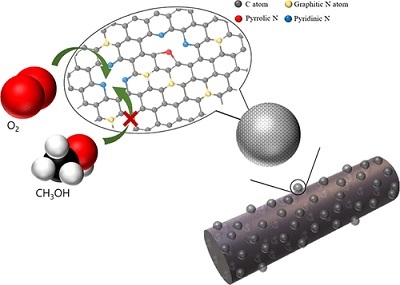 The carbon-encapsulated platinum cathode catalyst was synthesized by heat treatment of platinum-aniline complex-coated carbon nanofibers. Source: Dohyeon Lee et al.aniline complex-coated carbon nanofibers. The carbon shell of the catalyst proved effective in inhibiting methanol from accessing the platinum core, and this effect became more prominent as the graphitization degree of the carbon shell increased. The protective layer allowed oxygen permeation to support oxygen reduction reaction while excluding methane from the cathode.
The performance and stability of the new catalyst exceeded those of a commercial platinum catalyst during single-cell tests conducted under various conditions by researchers from Seoul National University (South Korea), Incheon National University (South Korea), Hyundai Motor Group (South Korea) and Soongsil University (South Korea).