Specifying diaphram pumps according to end use
Phil Hipol | December 01, 2020Pumps are used in several applications to transport, increase or decrease the pressure of gases, fluids or mixtures between one location and another. They are classified into two categories: positive and non-positive displacement pumps. Non-positive displacement pumps, such as centrifugal pumps, are capable of high continuous volumetric flow rates; however, if there is a restriction in the input or output lines, the pump will experience a commensurate decrease in flow rate. These pumps are therefore used in applications that require the transport of high fluid volumes at low pressure.
On the other hand, positive displacement pumps displace the same amount of fluid, regardless of system pressure, making them better suited for applications requiring high pressures at constant volumetric flow rates. The different types of positive displacement pumps include rotary, reciprocating and linear pumps, each with advantages and disadvantages, depending on application.
Configuration
Diaphragm pumps are a special type of positive displacement pump that use the reciprocating action of a flexing diaphragm to move fluids in to and out of a pumping chamber (Figure 1). This particular pump configuration consists of a diaphragm, pumping chamber, two ball valves and a driving mechanism that actuates the diaphragm. On the inlet or return stroke, the diaphragm moves upward, and a negative pressure is developed in the pumping chamber. This opens the inlet ball valve and closes the outlet valve, allowing fluid to enter the pumping chamber.
On the outlet, or actuation stroke, the diaphragm moves downward, and a positive pressure is developed in the pumping chamber. This closes the inlet ball valve and opens the outlet valve, allowing the fluid to flow out of the pumping chamber. A fixed volume of fluid enters and exits the pumping chamber with each stroke of the diaphragm, regardless of the pressure in the inlet or outlet lines.
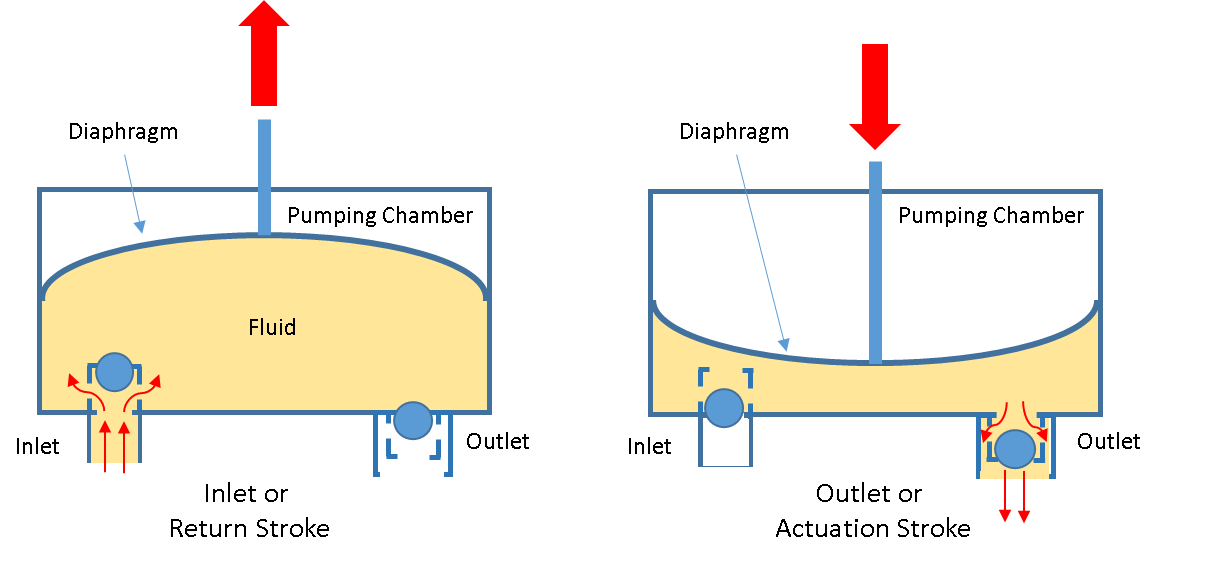 Figure 1: Diaphragm pump operation. Source: Phil Hipol
Advantages
Diaphragm pumps offer several advantages. They provide a constant volumetric flow of fluid, regardless of the system pressure. They are relatively simple, quiet and inexpensive, and are highly reliable because they do not include internal parts that contact and wear away, such as pistons or bearings.
Furthermore, they do not require special seals, like piston rings or O-rings, or lubricating oils that may contaminate the pumped fluid. Diaphragm pumps can operate over a wide range of temperatures and pressures and can be used to pump fluids with a wide range of viscosities, from low-viscosity air to high-viscosity sludges or slurries that contain large amounts of grit or solids. They can also be designed and engineered for use with corrosive, abrasive, toxic and flammable liquids.
Specifications
There are several key factors that must be considered in the specification of an appropriate diaphragm pump for a given application. First and foremost, the desired volumetric pumping capacity, flow rate and operating pressure must be defined. This will determine the required pumping chamber volume, diaphragm diameter and pump driving mechanism (pump stroke length, speed and horsepower).
Numerous types of driving mechanisms can be selected, such as mechanical (cranks or rods), hydraulic or pneumatic (pressurized fluids), or electro-mechanical (solenoids). These can be configured for single- or double-action operation. A single-action diaphragm pump will incorporate one diaphragm and one set of valves, where pressure from the diaphragm is supplied on the actuation stroke only. A double-action diaphragm pump will incorporate two diaphragms and two sets of valves, where pressure is supplied on both the actuation and return strokes of the diaphragm.
The diaphragm is the next major consideration in the specification of an appropriate diaphragm pump. Diaphragm materials must be selected that do not contaminate or react with the pumping fluid. These materials must also be resistant to the range of internal and external temperatures and pressures encountered during operation. Typical diaphragm materials include ethylene propylene diene monomer (EPDM) rubber, polytetrafluoroethylene (PTFE), natural rubber and other plastics and elastomers.
The selection of the diaphragm material also affects its stiffness, displacement range (stroke) and fatigue life. While a stiffer diaphragm will enable operation at higher pressure, it will require more energy from the driving mechanism to operate. Other factors that contribute to the stiffness, displacement range and fatigue life of the diaphragm include the diaphragm thickness, shape or geometry, and presence of features such as domes or stiffening ribs in the diaphragm design.
Other factors that must be considered in the specification of an appropriate diaphragm pump include the pump body and valve materials, which must also be compatible with the pumping fluid and internal and external operating temperatures and pressures. Metals, such as steel and aluminum can provide high tensile strength, durability and abrasion resistance, as well as high operating pressures. Plastics, on the other hand, are inexpensive and can provide resistance against corrosion and chemical attack, however, they may have lower pressure ratings. The driving mechanism or motor must also be compatible with the energy and environmental requirements of the pump while satisfying the stroke, speed and horsepower needed to supply the pumped fluid at the proper flow rate and pressure.
Further learning
Visit our listing of diaphragm pump suppliers
Learn (even) more about diaphragm pump operation, specifications and applications