
Turning cigarette butts into bricks
Marie Donlon | September 17, 2020Researchers from RMIT University in Australia have developed plans for transforming discarded cigarette butts into bricks.
Once cigarette butts are collected and added to the brick mixture, toxic chemicals and heavy metals that leach into the environment via discarded cigarette butts — including arsenic, chromium, nickel and other pollutants — are encased and inactivated when the brick mixture is fired. According to the team, the result is a lighter, better insulating brick that potentially reduces home heating and cooling costs.
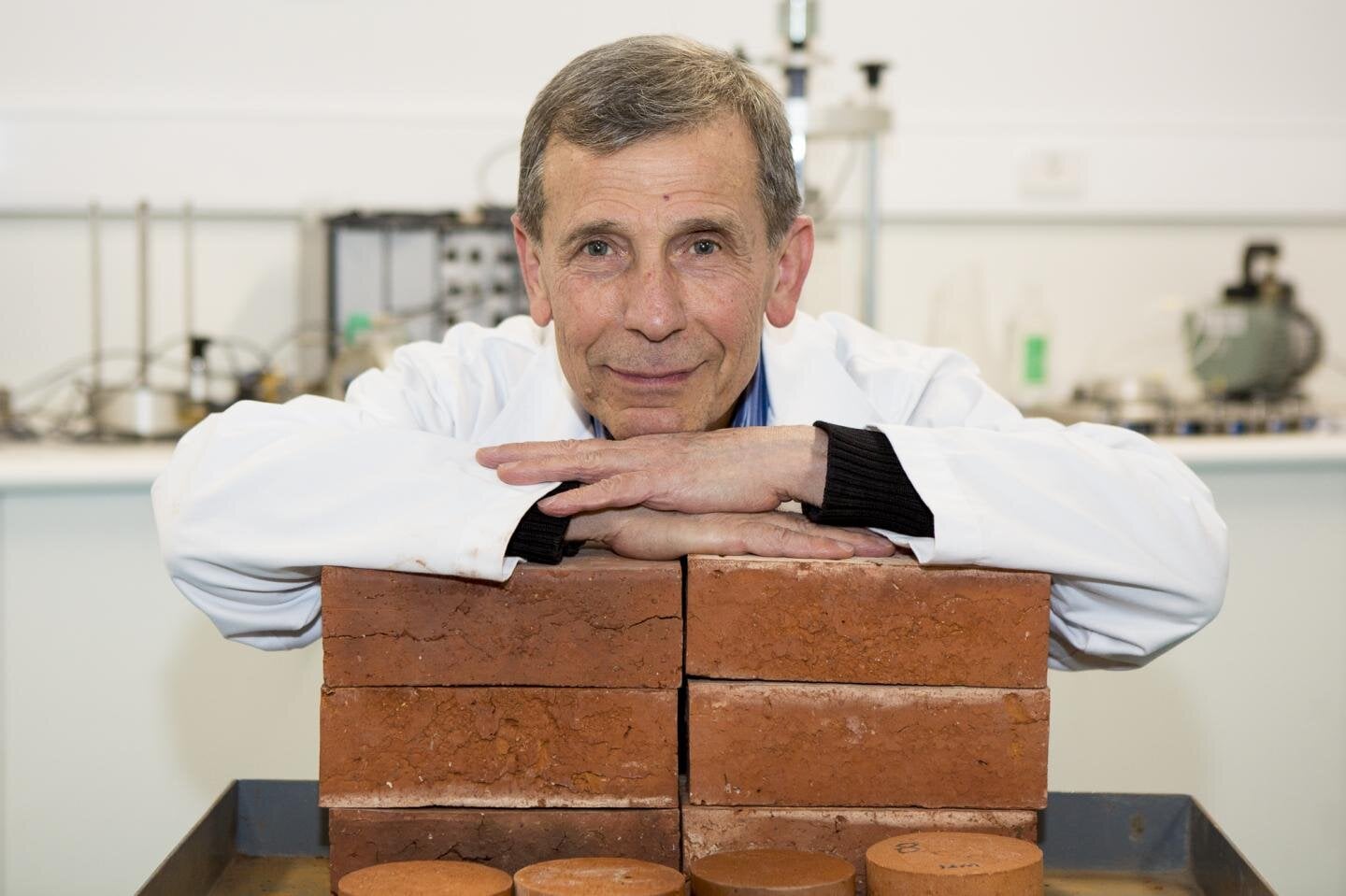 Associate professor Abbas Mohajerani with bricks made with cigarette butts. Source: RMIT University
By using roughly 1% of cigarette butt content in the making of bricks, the RMIT team believes that the energy required for firing bricks would be reduced by 10%. Additionally, finding a use case for the 1.2 million tons of toxic waste generated by cigarettes each year could significantly reduce pollution.
To make the transition from cigarette butts to bricks, the team believes that fines and penalties would need to be issued to those who do not discard cigarette butts into specialized containers. This would potentially prevent littering and simplify the collection of cigarette butts for the brick-making efforts.
Additionally, the team envisions a dedicated brick-making recycling facility located in every country around the world capable of recycling the cigarette butts.
The research appears in the journal Materials.


" . . . the team believes that fines and penalties would need to be issued to those who do not discard cigarette butts into specialized containers."
Ummmmm . . . and just who is going to enforce this? I hate to generalize this as I am sure there are some thoughtful and considerate smokers, but the majority don't really care about themselves or anybody else, so why do we think they will comply with butt collection schemes? This is just a silly academic exercise. Yes, it is technically feasible . . . .