Making plastic easier to recycle but still tough
Peter Brown | July 24, 2020 Much of the world's oceans and landfills are filled with plastic that does not degrade. MIT created a new material that could change that. Source: PixaBay
Researchers at MIT have developed a way to modify thermoset plastics with a chemical linker that not only makes the material easier to break down, but also allows them to retain their mechanical strength.
Researchers show that they could produce a degrable version of a thermoset plastic called pDCPD, break it down into a powder and use the powder to create more pDCPD. The model suggest that the approach could be used in a wide range of plastics and other polymers such as rubber.
One of the main problems with using plastics is its inability to break down, causing oceans and landfills to be jam packed with discarded items that never break down after use because the chemical bonds make it very difficult.
“This work unveils a fundamental design principle that we believe is general to any kind of thermoset with this basic architecture,” said Jeremiah Johnson, a professor of chemistry at MIT.
Two classes of plastics
Thermoplastics are broken into two major classes — polyethylene and polypropylene — used in plastic bags and other single-use plastics like food wrappers. Thermoplastics make up about 75% of worldwide plastic production and can be recycled by heating them again until they become liquid to be remolded into new shapes.
Thermoset plastics are made similarly, but it is difficult to return them to a liquid state and they typically burn before they can be remolded.
“Once they are set in a given shape, they're in that shape for their lifetime,” Johnson said. “There is often no easy way to recycle them.”
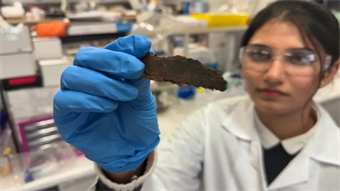
The researchers reused the resulting powder created by the new material to form a new pDCPD material and after dissolving the powder in a solution, they were able to make new pDCPD thermosets from the recycled powder.
“That new material has nearly indistinguishable, and in some ways improved, mechanical properties compared to the original material,” Johnson said. “Showing that you can take the degradation products and remake the same thermoset again using the same process is exciting.”
MIT said the approach could be applied to other types of thermoset chemistry and generate many other kinds of degradable materials such as acrylics, epoxies, silicones or vulcanized rubber.
The full research can be found in the journal Nature.