These utilities may be most at-risk from climate hazards
David Wagman | January 22, 2020The credit impact of climate hazards on regulated electric utilities depends in part on their ability to invest in mitigating measures, according to a new report from Moody's Investors Service.
The report examines the exposure of investor-owned utility holding companies with regulated U.S. electric subsidiaries to the heightened risk of extreme weather events brought on by climate change.
Climate hazards, ranging from higher air and water temperatures to increased intensity and frequency of storms, will increase both financial and physical risks for investor-owned utilities (IOUs). As a result, anticipation of these hazards is expected to be increasingly reflected in the capital investment programs of utilities, the ratings agency said.
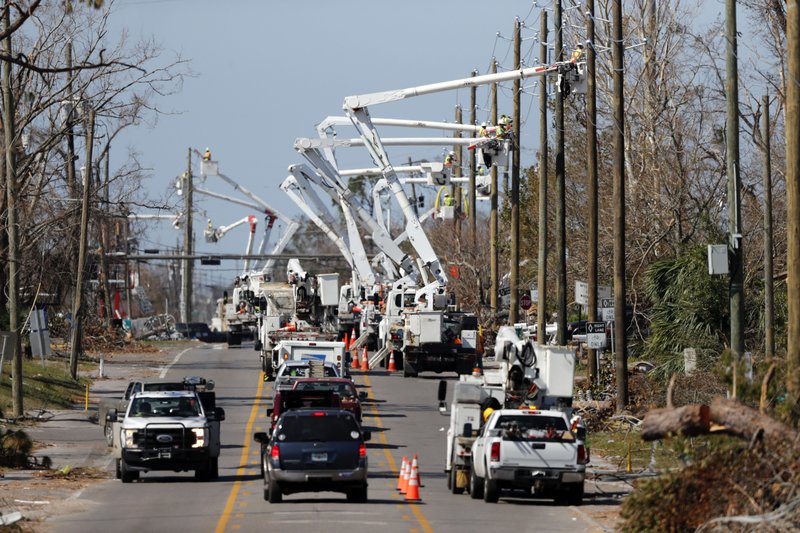 Utility infrastructure faces increased risk from climate hazards, according to a report from Moody's Investors Service. Source: AP/Gerald HerbertFour risk categories
The report segments the threats from extreme weather into four categories: heat stress, water stress, extreme rainfall and flooding, and hurricanes.
The report said that shifting temperatures and humidity levels associated with climate change can increase financial risk for utilities by contributing to increases or decreases in energy demand.
Higher temperatures also pose risk for utilities, as heat stress can impede thermoelectric power generation by reducing a power plant's cooling capacity. Heavy demand for cooling devices such as air conditioners places stress on the grid and may even result in power curtailments, rolling brownouts or blackouts. The Midwest and southern Florida face the highest levels of heat stress risk, the report said.
Water stress poses an additional risk for regulated utilities, particularly in California and the Colorado River region. The Moody's report said that as the most frequent cause of major power outages in the U.S., severe weather including hurricanes poses material risk for regulated utilities. Damage associated with major storms causes utilities to incur additional costs and impairs their ability to generate revenue.
However, the potential credit impact of hurricane risk is likely to be mitigated by state regulation, which typically enables IOUs to recoup storm-recovery costs if they are deemed to be prudently incurred.
Potentially at-risk utilities
The report said that NextEra Energy Inc. and its Florida Power & Light utility ranked first for potential credit risk due to hurricanes. More than two-thirds of the utility's service area falls in what Moody's said was a “red flag” category. The remainder of the utility's service territory is considered to be of high risk.
Dominion Energy Inc. and its Virginia and Carolinas-based utilities, ranked second in terms of hurricane risk. The report said that more than a quarter of its territory falls under the red flag, with the rest either at a high or moderate risk.
Duke Energy Corp. ranked third for risks from hurricanes. The greatest risks were noted as including Duke Energy Progress’ coastal Carolina operations and Duke Energy Florida’s Atlantic Coast and central regions. Duke also ranked high for exposure to extreme rain and flooding.
In addition, Ameren service territories in Illinois and Missouri were considered to be the most at-risk from rising temperatures, according to Moody's.
Xcel Energy was named as one of the most at risk due to the potential for future water stress, particularly in Colorado, New Mexico and Texas.
And Dayton Power & Light, a business unit of American Electric Power, was considered to be most at-risk from flooding.