IEA report: Global slowdown in energy efficiency progress
S. Himmelstein | November 05, 2019The global rate of energy efficiency improvement is slowing, according to a new report by the International Energy Agency (IEA). The deceleration in efficiency progress since 2010 is fueled by a mixture of social and economic trends, combined with some specific factors such as extreme weather. Policy measures and investments are failing to keep pace with rising energy demand, pointing to the need for new approaches to maximize potential efficiency gains from the diffusion of digital technologies throughout economies and energy systems.
Primary energy intensity in 2018 improved by just 1.2%, the slowest rate since 2010 and markedly slower than the 1.7% improvement in 2017. The rate is also well below the 3% minimum that IEA analysis shows is central to achieving global climate and energy goals. In China and India, primary intensity improved by almost 3%, a slight drop from 2017 levels. In Europe, it improved by 2%, up from 1.4% in 2017. In the U.S., primary intensity worsened for the first time in more than 25 years.
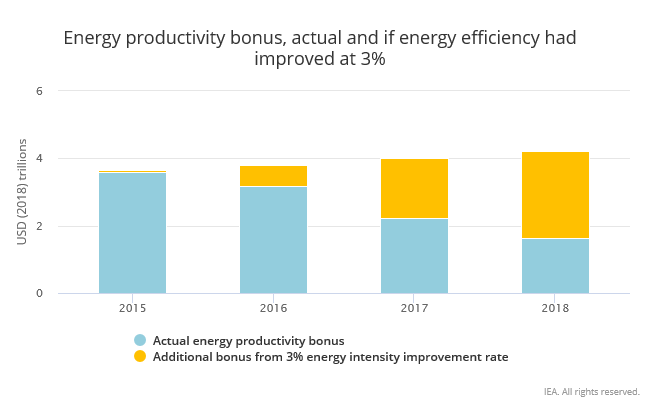 Source: IEA
In 2018, final demand, or total final consumption, grew by 2.2%, continuing an increasing trend since 2015, driven by strong growth in energy-intensive industries. Oil accounted for the largest share of final demand at around 41%, but demand growth slowed to 1.5% in 2018, a trend that has continued since 2015 when demand grew by 2.5%. In 2018, higher oil prices helped dampen demand for road transport fuels.
Technical efficiency gains have reduced energy-related emissions and enabled IEA member states to rein in spending across all fuels. Policy recommendations stress the need to exploit digitalization technology to boost end-use efficiency and reduce global buildings sector demand by up to 10% by 2040. The technology could also increase demand response capacity more than tenfold by unlocking new sources of flexible load in the buildings and transport sectors.