Aircraft Tracking System Based on Electronic Handshakes
Engineering360 News Desk | June 22, 2015A technology that tracks jetliners in real time relies on an “electronic handshake” between aircraft in flight and satellites orbiting around the Earth.
The idea stems from the disappearance of Malaysian Airline Flight 370 in 2014 when electronic handshake signals were used to trace the probable route of the Boeing 777 that disappeared while en route from Kuala Lumpur to Beijing.
Kelly Ortberg, CEO of Rockwell Collins Inc., says that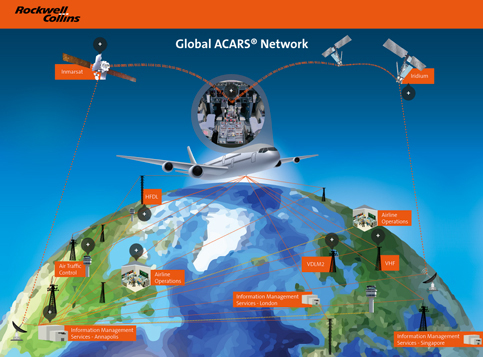 A technology that tracks jetliners in real time borrows a feature of the disappearance of Malaysian Airline Flight. Source: Rockwell collins the company is working with nine carriers to test a tracking system that uses a similar electronic communications to trace an aircraft as it flies over oceans and beyond the reach of radar.
The technology pinpoints an aircraft’s position using technology already found in many jetliners, including high-frequency radio antennas that send signals to satellites and to automated systems that stream data on an aircraft’s performance.
“There’s a lot of disparate info that’s never been used for tracking purposes. Maybe no one of those is very accurate, but by fusing those different things we can create a position for the aircraft,” Ortberg says.
Other suppliers are also working on technology to trace planes in flight—a technology gap put in the spotlight during the search for the missing Malaysian flight. For example, Airbus Group SE will partner with flight-tracking company Flightradar24 on a similar product that would help carriers meet new standards on monitoring that are under development by international regulators.