Components, tooling and skills gaps challenged Apple's US manufacturing
Kevin J. Harrigan | February 04, 2019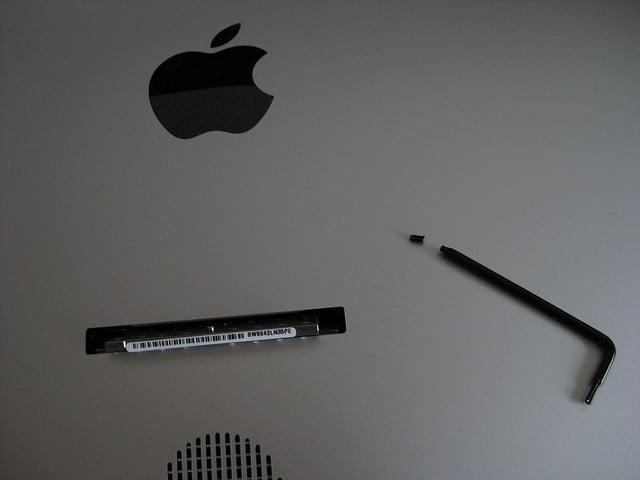 A lack of fasteners delayed the launch of the Mac Pro and highlighted the gap between U.S. and Chinese manufacturing abilities. Source: Achim Hepp/ CC BY-SA 2.0In 2013, Apple Inc. struggled to deliver a made-in-America Mac Pro computer because domestic machine shops could not meet the company’s order for specialty fasteners, according to a recent New York Times article.
The year prior, Apple executive Tim Cook promised the next edition of the Mac computer would be assembled in the United States and committed the company to domestic manufacturing. According to the Times, Apple soon learned that the rapid, custom fastener manufacturing they enjoyed in China could not be replicated near their computer assembly facility in Austin, Texas.
Although most components are produced overseas, the Mac Pro is assembled by Flextronics in Austin, Texas, making it eligible for "Made in U.S.A." labeling and tariffs. However, Flextronics struggled to create new parts to fulfill computer design tweaks and its machine shop could produce at most 1,000 screws per day.
As a result, sales of the computer were postponed by months. Eventually Flextronics partnered with Caldwell Manufacturing of Lockhart, Texas, which was able to deliver 28,000 screws, albeit of a modified design.
American companies are wary of future international manufacturing due to recent political trade tensions, particularly with China. However, the assembly challenges of the Mac Pro, in addition to the skills and culture of the Chinese workforce, means Apple is unlikely to consider stateside manufacturing any time soon.
“In the U.S., you could have a meeting of tooling engineers and I’m not sure we could fill the room,” said Cook in 2017. “In China, you could fill multiple football fields.”
The skills gap, coupled with cheaper labor and 24-hour manufacturing in China, means Apple products will continue to be made overseas for the foreseeable future.