NASA’s Space Network Ground Infrastructure Overhaul Passes Key Milestone
Eric Olson | December 31, 2018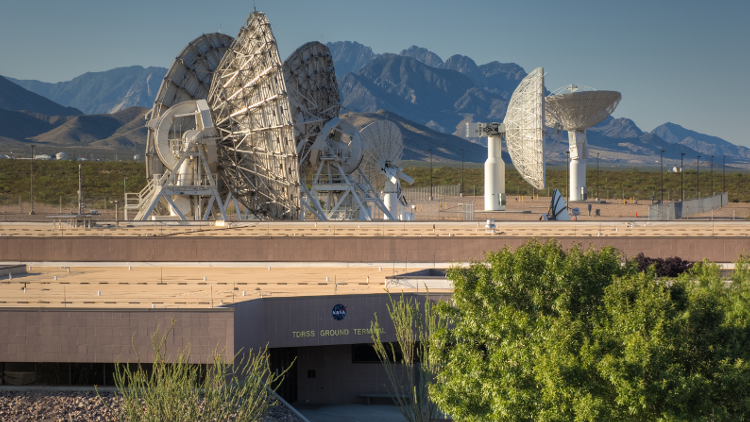 The Second Tracking and Data Satellite System Ground Terminal (STGT) at the White Sands Complex in New Mexico. Source: NASA
NASA’s effort to modernize one of its key space communications systems has reached a milestone. The Space Network Ground Segment Sustainment (SGSS) project has successfully passed its final laboratory System Acceptance Test (SAT) according to the prime contractor on the project, General Dynamics.
SGSS is an effort to upgrade the ground-based segment of NASA’s Space Network, replacing obsolete, legacy hardware with modern high-performance equipment to improve capabilities and reduce maintenance costs for the system.
Space Network
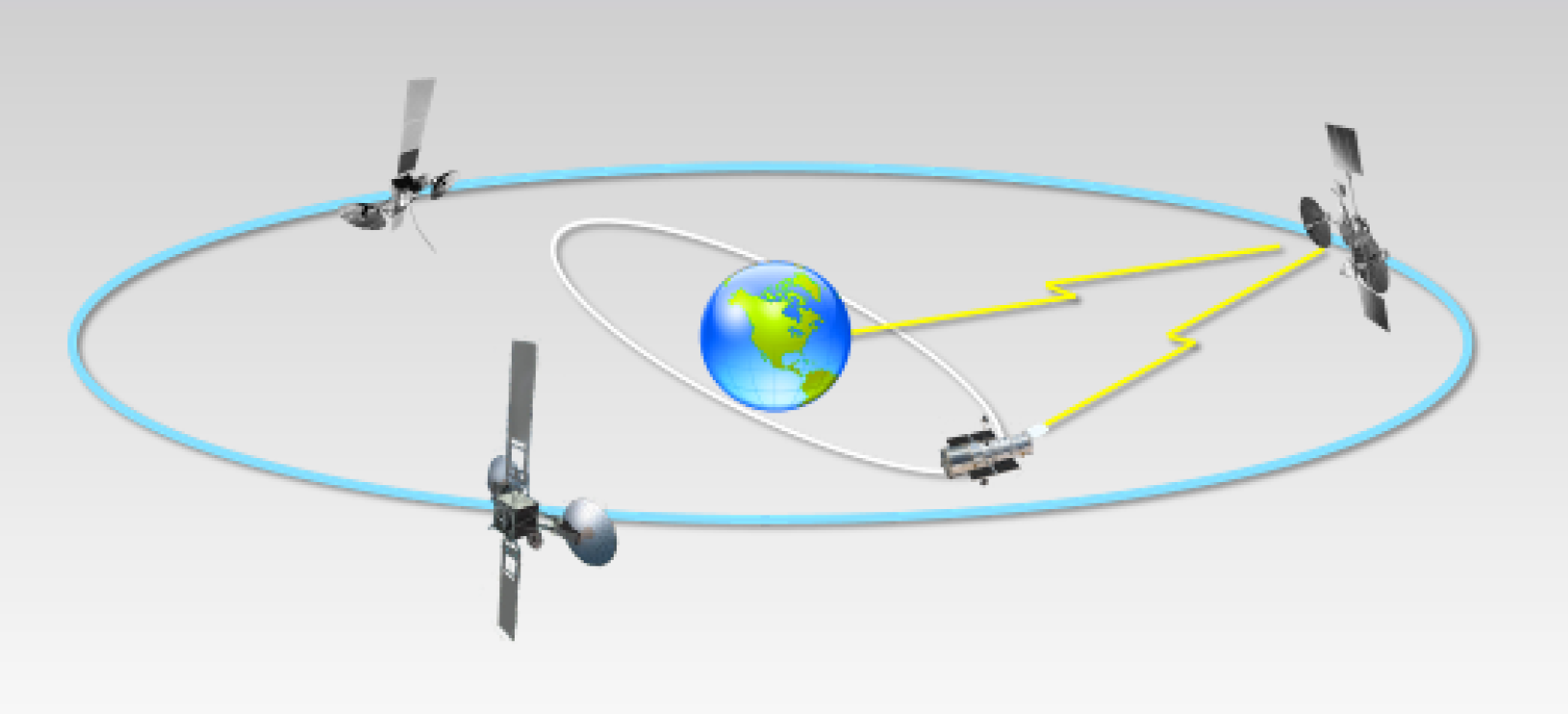 The Space Network’s TDRSS constellation is perched high in geostationary orbit, an ideal vantage point from which to relay signals from spacecraft in lower Earth orbits to stations on the ground. Source: NASA
The Space Network is comprised of a space segment of orbiting satellites and a ground segment consisting of stations on the ground. The space segment is known as the Tracking and Data Relay Satellite System (TDRSS) and consists of ten Tracking and Data Relay Satellites (TDRS) in geosynchronous orbit. These TDRSs relay data to the ground segment from commercial and government spacecraft in orbit around Earth, including the Hubble Space Telescope and the International Space Station. In total, over 40 missions are supported by the Space Network.
The network’s ground segment receives and processes signals from the space segment and distributes data to customers. It consists of two ground stations at the White Sands Complex in Las Cruces, New Mexico, and an additional remote station in Guam.
Unlike the space segment, which has received regular technology upgrades, the ground segment is suffering from obsolescence. Since the first TDRS was launched in April 1983, an additional twelve satellites spanning three generations have been launched, with the latest boosting into orbit in August 2017. Meanwhile, the original White Sands Ground Terminal (WSGT) was completed in July 1981. Although construction of a Second TDRS Ground Terminal (STGT) with newer technology was completed in April 1994 and upgrades to WSGT were completed in February 1996 based on technology from STGT, the ground segment has received no major enhancements since then. Languishing in technological obsolescence, with increasing maintenance costs and capabilities limited by dated equipment, the ground segment is finally receiving a modern overhaul with SGSS.
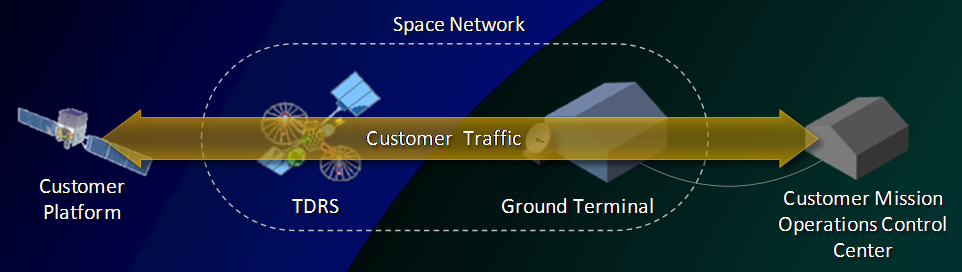 The Space Network relays telemetry, tracking and command signals between customer spacecraft and mission control centers. Source: NASA
SGSS Goals
The project aims to enable cost-efficient operation and maintenance of the space network while continuing to deliver high-quality, high-uptime services to support space missions for at least another 25 years. To accomplish this, the Space Network’s command, control and communications infrastructure on the ground is being upgraded, including the antennas, electronics, computers and networking equipment that receive and process signals from TDRSS and deliver data to individual users.
SGSS will replace the ground segment’s largely analog signal processing infrastructure with a digital signal distribution system, improving data communication rates and modernizing communication protocols. The project seeks to maximize extensibility and minimize costs by using open-standard, commercial off-the-shelf components.
Budget Concerns
 SGSS deployment proceeds at the White Sands Complex. At left, new signal, power and network cables are installed under the floor. At right, new equipment racks are set up. Source: NASA
Keeping expenses under control, however, has not been easy given the difficult nature of replacing complex legacy systems while maintaining fully functional operation to support ongoing missions. Since a cost and schedule rebaseline in 2015, SGSS’s total price tag has risen. According to a Government Accountability Office report in May 2018, the project’s costs grew by nearly $113 million to a total of $1.32 billion even as plans were eliminated to add a new third ground station at Blossom Point, Maryland, and limit renovations to the White Sands Complex. Some of the cost overruns are attributed to contractor performance, including a less-than-complete understanding of project requirements, insufficient technical planning, and a failure to consider the full extent of the effort required to fix software bugs.
NASA is conducting an independent review of the entire SGSS project. Costs are expected to rise further if the review deems the project should continue to move forward.
Despite budget concerns, the project is making progress. Much of the new equipment is already installed at the White Sands facility, although not yet in full operation. And the completion of the System Acceptance Tests — carried out at General Dynamics’ SGSS evaluation facility in Scottsdale, Arizona — assessed 430 system-level requirements, paving the way toward the final stage of verification testing and system implementation.
Future tests will occur on-site at the White Sands Complex, validating end-to-end system functionality prior to the project’s first Operational Readiness Review (ORR) in 2019. Completion of the ORRs is the final step necessary to verify that all systems work as expected before SGSS is put into full active operation.
Read about four ways NASA is fighting communications system obsolescence with SGSS.
Also read: NASA Data Acquisition Networks Through History
[Discover satcom antenna products on Engineering360.]