Report: Planning for Power Reliability Under Accelerated Generation Retirements
S. Himmelstein | December 20, 2018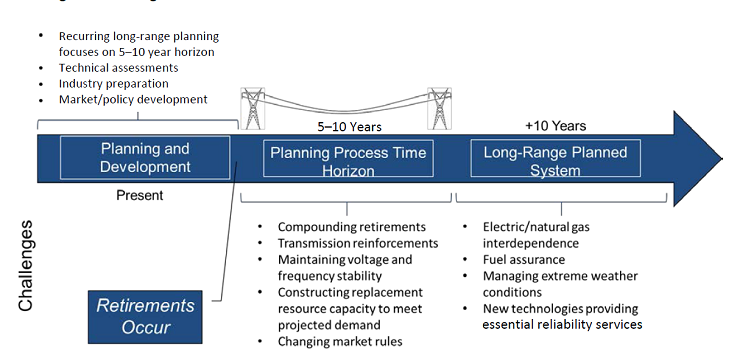 Notional view of accelerated retirement scenario and reliability challenges. Source: NERC
A shift in the North American bulk power system (BPS) is marked by additions in new natural gas, wind and solar generating capacity as older fossil-fired and nuclear generation units retire. The transformation is spurred by low natural gas prices, governmental policies and declining technology costs.
The North American Electric Reliability Corporation conducted a generation retirement scenario (NERC) to examine the implications of accelerated generation retirements on resource adequacy, transmission adequacy and grid reliability. The analysis considers the 27 GW of generator retirements confirmed through 2022 in addition to potential accelerated retirements of 91 GW. The total retirements analyzed encompass 80 GW of coal-fired capacity and 38 GW of nuclear generation capacity.
Maintaining the reliability of the BPS during the transition will likely require transmission upgrades or reinforcements combined with new generation dispatch requirements. The increased penetration of natural gas could leave the bulk power system vulnerable to fuel delivery risks in areas without firm pipeline service. Flexibility requirements from conventional generation to balance increased variable energy resources are also projected to increase. Fuel assurance analyses should consider specific regional fuel mixes, fuel supply infrastructure and contractual provisions governing fuel delivery.