Composite Material Regulates Its Own Temperature
S. Himmelstein | October 28, 2018Materials scientists at the University of Nottingham, U.K., adopted a bio-inspired engineering approach to develop a 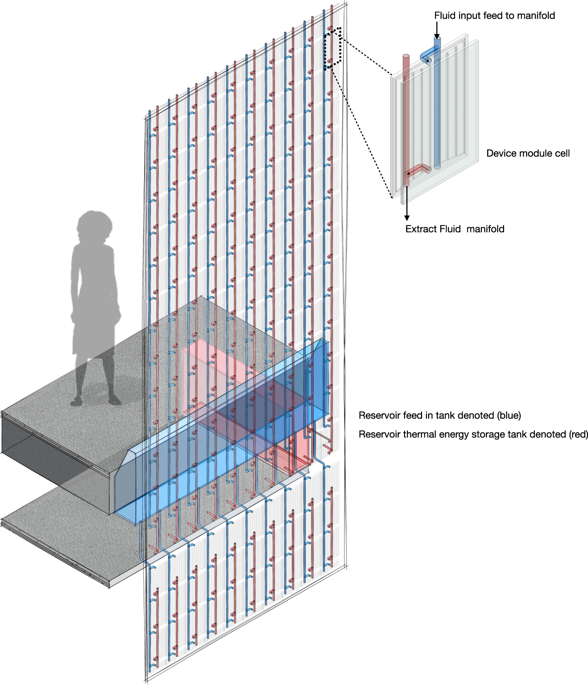 An illustration of an approach of multiple parallel-aligned module cell network to generate a collective operational unit. Source: University of Nottinghamthermally-functional material made of a synthetic polymer.
A leaf-like model with fluids flowing through microchannels was used to replicate the fluidics process responsible for regulating temperature in mammals and for solar radiation absorption in plants. Precise control measures realized by finely tuning flows to manipulate thermal gains allow the material to switch conductive states and manage its own temperature in relation to its environment.
The polymer could find application as a heat regulation system for burn injuries to cool skin surface temperature and improve healing. It might also be of service in space flight where high solar loads can cause thermal stresses on the structural integrity of space capsules. Thermal energy could be removed from the re-circulated fluid system to be stored in a reservoir tank on board the capsule. The researchers theorized that the captured energy could be converted into electrical energy or to heat water for use by the crew.
The research is published in Scientific Reports.