Researchers on the (Garden) Path Toward Developing Blue Roses
Marie Donlon | October 11, 2018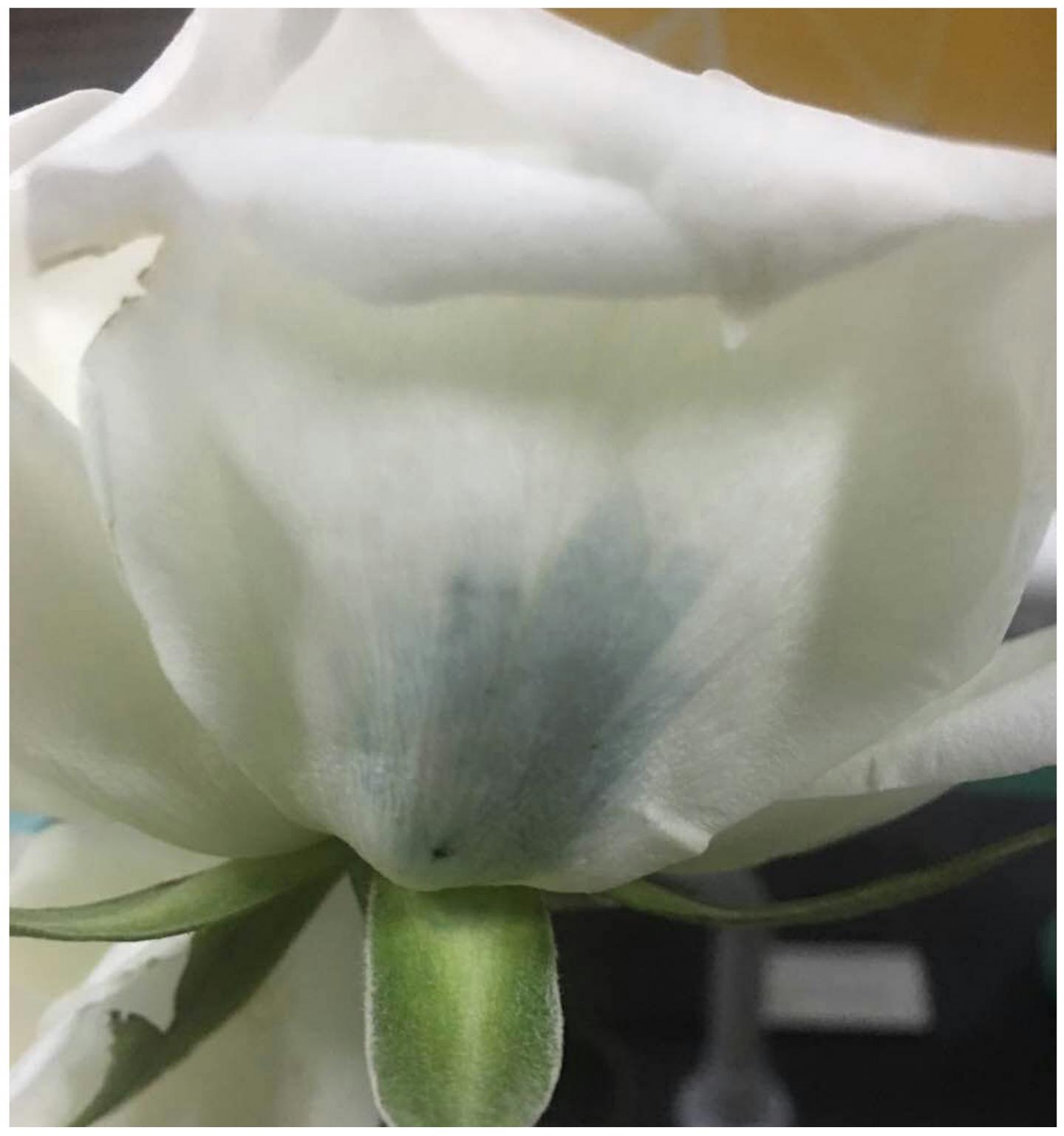 By expressing bacterial genes, white rose petals can take on a blue hue. Source: American Chemical SocietyModern biotechnology may soon be changing the face of gardening, giving gardeners the elusive blue rose.
Although blue roses do not exist in nature, a team of researchers has come up with a method to express pigment-producing enzymes from bacteria in white rose petals, according to research published in ACS Synthetic Biology.
To achieve such a feat, researchers Yihua Chen, Yan Zhang and their colleagues selected two bacterial enzymes that when combined will transform L-glutamine (a constituent of rose petals) into the blue pigment called indigoidine. The researchers produced a strain of Agrobacterium tumefaciens, which includes two pigment-making genes that are derived from a different species of bacteria.
Commonly used in plant biotechnology, A. tumefaciens easily inserts foreign DNA into plant genomes. Once the team injected the engineered bacteria into the white rose petal, the bacteria shifted the pigment-making genes to the rose genome, thereby spreading the blue color from the injection site. The team is calling the rose produced in the course of the study the world’s first engineered blue rose despite the short-lived and spotty color of the engineered rose.
For more on the study, go to ACS Synthetic Biology.