Second-life Battery Energy Storage System Developed by Renault
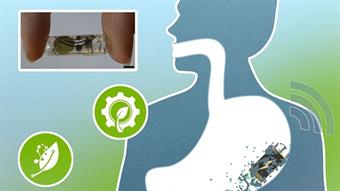
Peter Brown | September 25, 2018 An artist rendering of how the battery system might be implemented. Source: Renault
Automotive OEM Groupe Renault has launched an advanced battery storage system for energy developed exclusively from new and used electric vehicle (EV) batteries.
The system will have a storage capacity of at least 60 MWh, making it the biggest system of its kind to be built in Europe, Renault said. The first facilities to be developed using the system will be at three sites in France and Germany at the Renault plants in Douai and Cléon as well as a former coal-fired plant in North Rhine-Westphalia. The facilities will be up and running in early 2019.
The storage capacity will be gradually expanded over time to contain the energy of 2,000 EV batteries. At this phase, the system will reach or exceed 60 MWh, or about the daily consumption of a city of 5,000 households.
The stationary storage system is built using EV batteries compiled in containers using second-life batteries as well as new batteries stored for future use in standard replacement during after-sales operations.
The system will be used to manage the difference between electricity consumption and production at a given time in order to increase the proportion of renewable sources in the energy mix, Renault said. The system will be used to offset the demand on the electricity grid by integrating different energy sources with fluctuating production capacities. Any gap between consumption and production sets off a disturbance that could cause outages or allow the grid to become unstable.
“Our stationary storage solution aims to offset these differences: It delivers its reserves to a point of imbalance in the grid at a given time to reduce the effects,” said Nicolas Schottey, Director of the Groupe Renault New Business Energy program.
Furthermore, because the system is based on clean electric energy, it will help boost the economic attractiveness of low-carbon energies, Renault said.